HomeBlogCreating a Knowledge Graph for AI Search and Answer Engines
AI SEO
Creating a Knowledge Graph for AI Search and Answer Engines
Asim Ansari
June 24, 2026
20 min read
Learn how to create a brand knowledge graph for AI search using entities, relationships, JSON-LD schema, sameAs links and AEO best practices for better AI citations.
Quick Answer
A knowledge graph for AI search is a structured, machine-readable map of your brand’s entities, facts, and relationships. It helps answer engines (like ChatGPT and Google AI Overviews) understand exactly who you are, what you offer, which industries you serve, and which trusted external sources confirm your identity. The most practical format for websites to build a knowledge graph is a combination of semantic HTML content plus highly connected JSON-LD Schema markup.
The core difference between standard schema markup, entity SEO, and a true Knowledge Graph.
How answer engines use Linked Data and entities to cite sources.
Step-by-step instructions for creating an Organization knowledge graph.
How to use sameAs links to anchor your brand identity.
How to validate your knowledge graph using JSON-LD.
Creating a Knowledge Graph for AI Search and Answer Engines
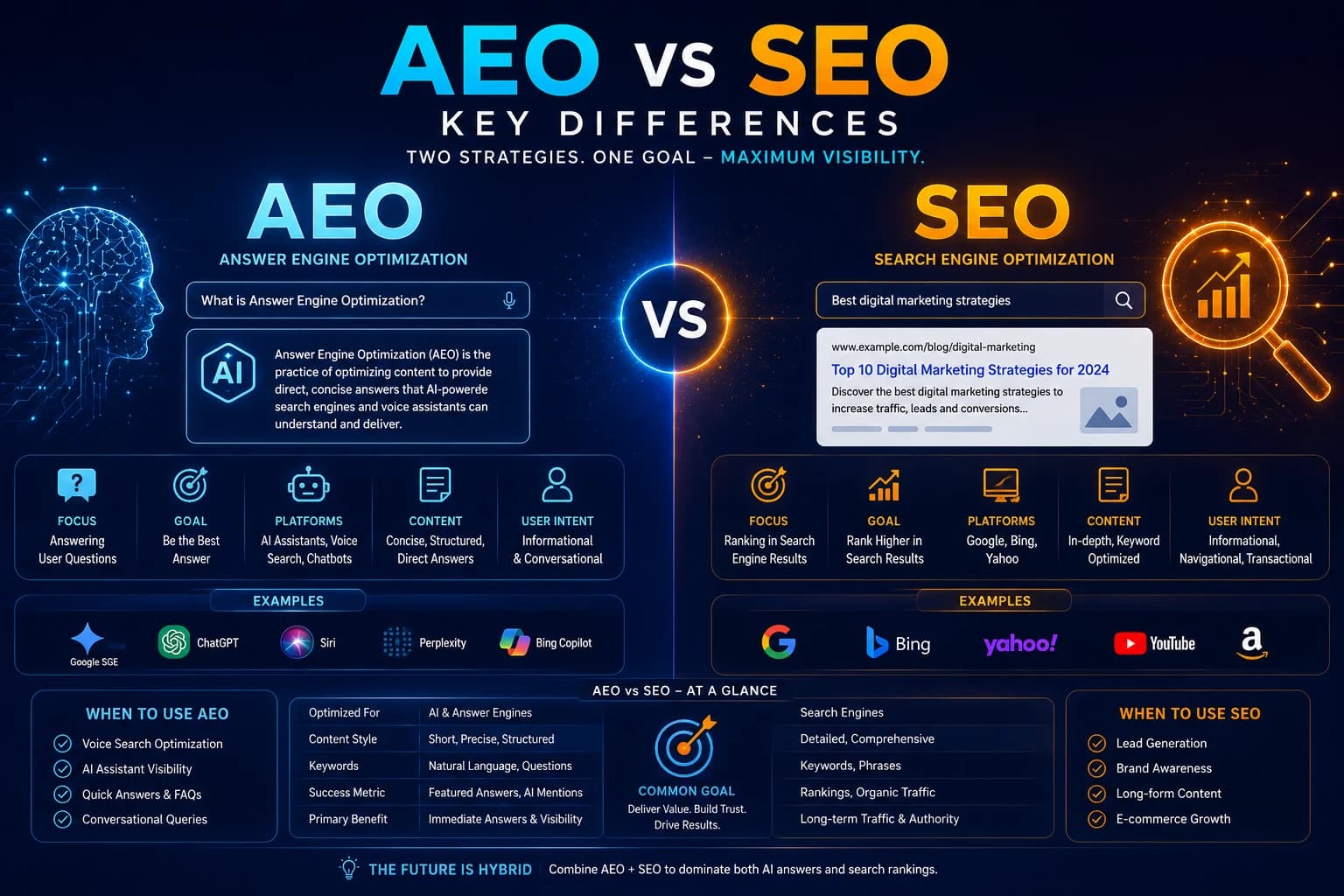
The web is transitioning from a web of documents (strings) to a web of data (things). In traditional SEO, optimizing a website meant putting the right keywords in the right tags so a search engine could match strings of text to a user's query.
Today, AI-powered answer engines—such as ChatGPT, Perplexity, and Google AI Overviews—do not simply match keywords. They synthesize answers by traversing Knowledge Graphs.
If your brand wants to dominate Answer Engine Optimization (AEO), you can no longer rely on ambiguous marketing copy. You must explicitly define your company, your founders, your services, and your industry relationships using Entity SEO and JSON-LD structured data.
Need Help Building Your Brand Graph?
Intellectual Clouds helps businesses structure their brand entities, services, authors, schema markup and sameAs signals so AI search engines can understand, trust and cite them more accurately.
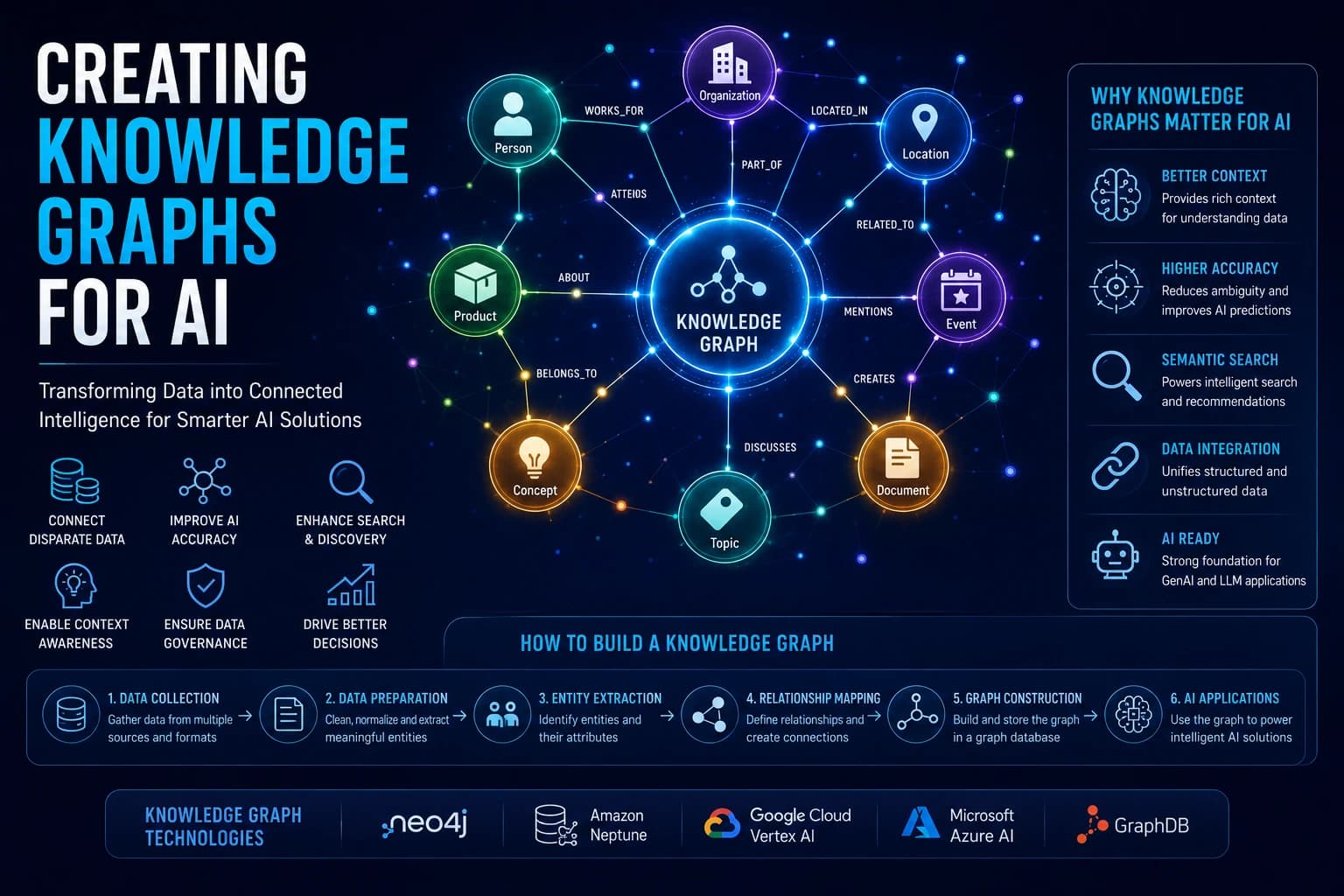
A knowledge graph is a semantic network that represents real-world entities (objects, events, situations, or concepts) and illustrates the relationships between them.
According to the W3C Linked Data principles, the semantic web relies on identifying entities with unique URIs and connecting related entities via links. When you build a knowledge graph on your website, you are organizing your information exactly how a neural network processes it: through nodes (entities) and edges (relationships).
Why Knowledge Graphs Matter for AI Search
According to Google's structured data documentation, structured data gives search engines "explicit clues about the meaning of a page."
Large Language Models (LLMs) are statistical prediction engines. If your site consists only of unstructured paragraphs, the LLM has to guess the relationship between two nouns. If it guesses incorrectly, you suffer an AI Hallucination. A brand knowledge graph removes the guesswork by feeding the model deterministic facts.
Knowledge Graph vs Schema Markup vs Entity SEO
Many digital marketers confuse these three terms. While they are related, they represent different levels of semantic maturity.
Concept
Definition
Scope
Schema Markup
The vocabulary (Schema.org) and syntax (JSON-LD) used to tag page elements.
Page-level (e.g., tagging a recipe or an FAQ).
Entity SEO
The strategy of optimizing for concepts (topics, people, brands) rather than keywords.
Content-level (e.g., building topical authority).
Knowledge Graph
A structured database of connected entities representing your entire brand ecosystem.
Domain/Brand-level (connecting Schema and Entities).
How Answer Engines Use Entities
When ChatGPT or Perplexity receives a prompt like, "Which SaaS companies in Chicago offer AI SEO consulting?", it relies on entity resolution.
Entity Relationship Map
[Organization] Intellectual Clouds
↓
makesOffer
↓
[Service] AI SEO
[Service] Salesforce
[Service] Cloud Consulting
↓
hasCredential
[Person] Asim Ansari
↓
sameAs
[WebSite] LinkedIn Profile
Without this explicit graph, an LLM might know you exist, but it will lack the high-confidence connection between your Organization and the specific Services you offer, reducing the likelihood of a citation.
Core Entities Every Brand Should Define
To build a knowledge graph, you must map the core entities of your business to the Schema.org vocabulary.
Entity Type
Example
Recommended Schema
Company
Intellectual Clouds
Organization
Founder/Author
Team member or expert
Person
Service
AI SEO, Salesforce, Cloud Consulting
Service or Product
Blog Topic
AEO, Knowledge Graph, AI SEO
DefinedTerm or Thing
Industry
SaaS, Retail, Healthcare
Audience or DefinedTerm
Location
Business service area
Place or PostalAddress
External Profiles
LinkedIn, Crunchbase, Wikidata
sameAs
9 Steps to Create an AI Knowledge Graph
Follow this framework to transition your website from unstructured text into a machine-readable entity map.
Step 1: Identify Your Main Entity
Your brand is the central node of your graph. The homepage and your "About" page should define this Organization entity. Schema.org Organization provides properties like founder, foundingDate, logo, contactPoint, knowsAbout, and areaServed which are critical for establishing your identity.
Step 2: Map People, Services, and Products
Next, list all secondary entities. Who works at the company? What exact services do you sell? Each of these requires its own dedicated URL and its own schema definition.
Do not combine multiple services onto one page; give each entity its own node (URL).
Step 3: Define Relationships Between Entities
This is where standard schema becomes a Knowledge Graph. You must nest your JSON-LD or use @id referencing to link them.
Use makesOffer to connect your Organization to your Service.
Use alumniOf or worksFor to connect your Person to your Organization.
Weak Brand Data
A simple HTML page saying "We sell software." No schema. No links to author bios. No verification links. The AI has to guess what you actually do.
Structured Knowledge Graph
A semantic HTML page utilizing nested JSON-LD schema linking the Organization to its founders and defining its expertise using the knowsAbout array.
Step 4: Add JSON-LD Schema
The W3C standard JSON-LD 1.1 is the most practical format for expressing linked data on websites. Google strongly recommends JSON-LD over Microdata or RDFa.
JSON-LD Example
Step 5: Use sameAs Links for Entity Confirmation
The sameAs property is arguably the most important element of entity SEO. According to Schema.org, sameAs connects an entity's identity to an unambiguous external URL.
By linking your Organization schema to your Wikidata, Crunchbase, LinkedIn, and official social profiles, you prove to AI engines that the "Intellectual Clouds" mentioned on LinkedIn is the exact same entity running this website.
Step 6: Build Supporting Entity Pages
Create dedicated HTML pages for your experts (Author bios) and your policies (Brand Facts). Each page acts as the definitive URI for that entity.
Step 7: Connect Internal Links Around Entities
Internal linking isn't just about passing PageRank anymore. It is about building topical clusters. Format your content for AI crawlers using descriptive anchor text to reinforce the relationships defined in your JSON-LD.
Step 8: Validate Schema and Fix Conflicts
A broken graph is worse than no graph. Use the Google Rich Results Test and the Schema Markup Validator to ensure there are no syntax errors in your JSON-LD. Conflicting data (e.g., claiming two different headquarters locations) will cause the AI to drop your entity confidence score.
Step 9: Monitor AI Search Mentions
Once deployed, query ChatGPT and Perplexity for your brand to see if they accurately recite the data from your graph. If they hallucinate, adjust your knowsAbout or makesOffer fields to be more explicit.
Brand Entity Checklist
Use this checklist to ensure your brand's knowledge graph is complete and ready for AI ingestion.
Build a Brand Knowledge Graph for AI Search
Intellectual Clouds helps businesses structure their brand entities, services, authors, schema markup and sameAs signals so AI search engines can understand, trust and cite them more accurately.
A knowledge graph is a structured data network that maps real-world entities (like companies, people, and products) and defines the exact semantic relationships between them.
What is a knowledge graph for AI search?
It is a specific deployment of schema markup and entity SEO designed to feed deterministic, machine-readable facts directly to AI engines like ChatGPT and Perplexity, ensuring they understand and cite your brand correctly.
How does a knowledge graph help ChatGPT understand a brand?
Instead of forcing ChatGPT's crawler to parse unstructured marketing copy, a knowledge graph provides explicit JSON-LD data. It tells the AI exactly who the founder is, what the services are, and where the official social profiles are located.
Is schema markup the same as a knowledge graph?
No. Schema markup is the syntax (the code) used to build the knowledge graph. A knowledge graph is the complete, interconnected web of those schema nodes across your entire brand domain.
What is sameAs schema?
The sameAs property explicitly links your website's entity to authoritative external URLs (like a Wikipedia page, LinkedIn profile, or Crunchbase). It is critical for proving identity to AI engines.
Which schema types are best for entity SEO?
The foundational entity schemas are Organization, Person, Product, and Service. Supporting schemas like DefinedTerm, Article, and FAQPage help contextualize those primary entities.
Do small businesses need a knowledge graph?
Yes. In fact, small businesses need it more. Without the massive brand awareness of a Fortune 500 company, small businesses rely entirely on structured data to prove their existence and relevance to AI crawlers.
How do I validate a JSON-LD knowledge graph?
You should run your page URLs through the Google Rich Results Test and the official Schema Markup Validator to ensure there are no syntax errors or conflicting entity definitions.
Can a knowledge graph reduce AI hallucinations?
Absolutely. By feeding AI engines deterministic facts rather than forcing them to guess from unstructured text, you significantly reduce the risk of the model inventing false policies or product features.
Can Intellectual Clouds build a brand knowledge graph?
Yes. Intellectual Clouds provides specialized semantic SEO services, helping enterprises map their entities, deploy advanced JSON-LD architecture, and align their digital footprint for the era of generative AI search.
Asim Ansari is the Founder of Intellectual Clouds and a Certified Salesforce Administrator and Pardot Specialist with 17+ years of experience across Salesforce CRM, AI automation, cloud infrastructure (AWS), and digital transformation. He writes on AI agents, Salesforce delivery, Answer Engine Optimisation (AEO), and AI-accelerated business operations.