⚡ Quick Answer: AEO vs SEO in 60 Seconds
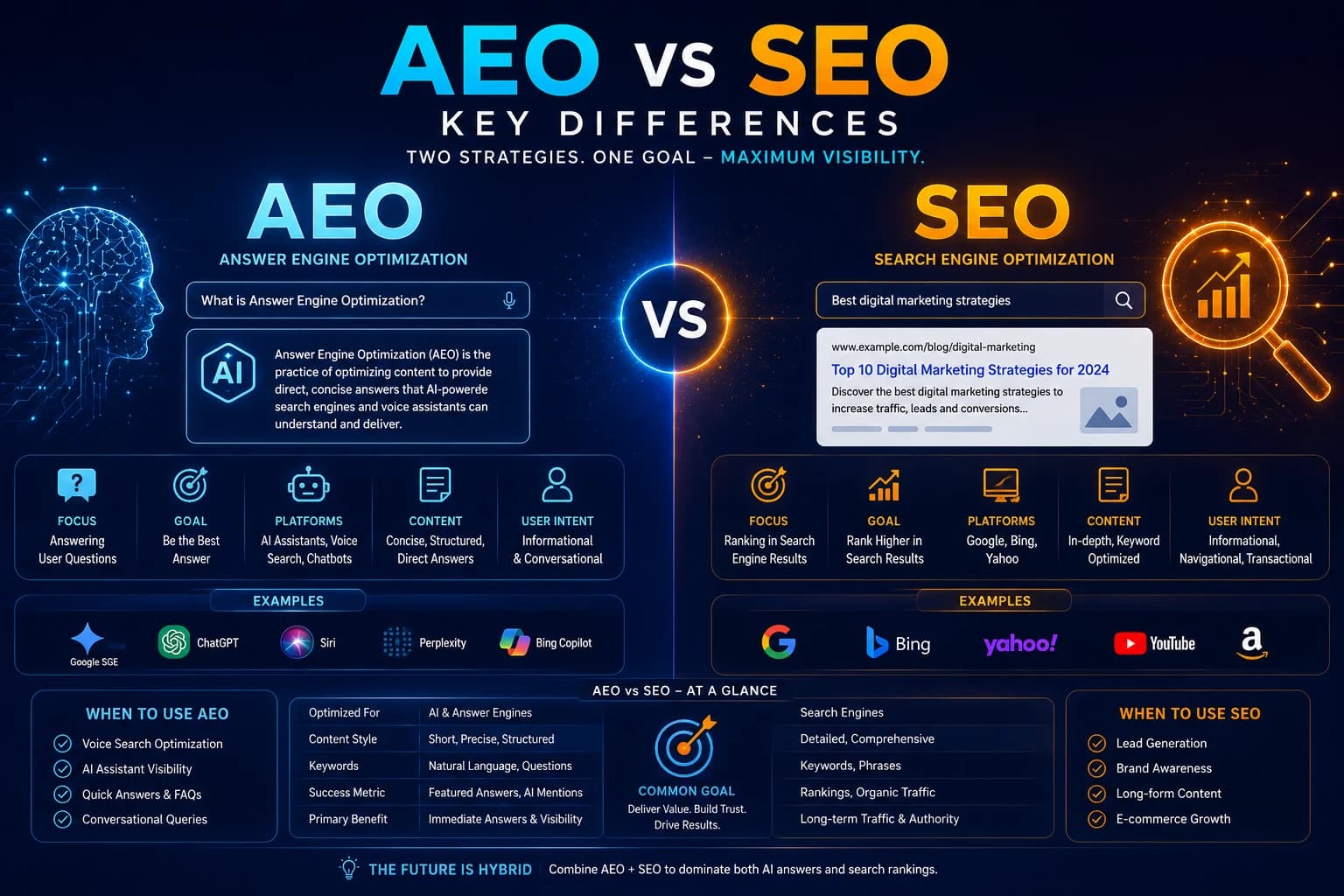
The key difference between AEO and SEO is their end goal. SEO (Search Engine Optimization) aims to rank web pages on traditional search engines (like Google) to drive organic click-through traffic. AEO (Answer Engine Optimization) aims to provide concise, factual data so that AI models (like ChatGPT, Perplexity, and Google AI Overviews) cite your brand directly in conversational answers, often bypassing the need for a click-through. You need both to survive the AI search era.
By Intellectual Clouds Team | Last Updated: June 22, 2026
The Evolution of Search: From Links to Direct Answers
For two decades, SEO was the undisputed king of digital marketing. However, with the rise of Large Language Models (LLMs) and Generative AI, the way humans seek information has fundamentally changed. We are shifting from searching for blue links to demanding instant answers.
The Search Paradigm Shift
Traditional SEO
10 Blue Links & SERPs
➔
⬇
AI Overviews
Google's SGE & Featured Snippets
➔
⬇
Answer Engines
ChatGPT, Perplexity & Claude
➔
⬇
Brand Citations
AEO establishes you as the source
AEO vs SEO Comparison Table
Here is a definitive breakdown of how Answer Engine Optimization differs from traditional Search Engine Optimization.
| Factor | SEO (Search Engine Optimization) | AEO (Answer Engine Optimization) |
|---|
| Goal | Rank pages in search results (SERPs) | Get cited in AI / answer responses |
| Main Metric | Ranking position, CTR, Traffic volume | Brand Citations, AI Visibility, Knowledge Panel |
| Content Style | Long-form narrative, storytelling, keyword density | Direct answers, concise FAQs, highly structured blocks |
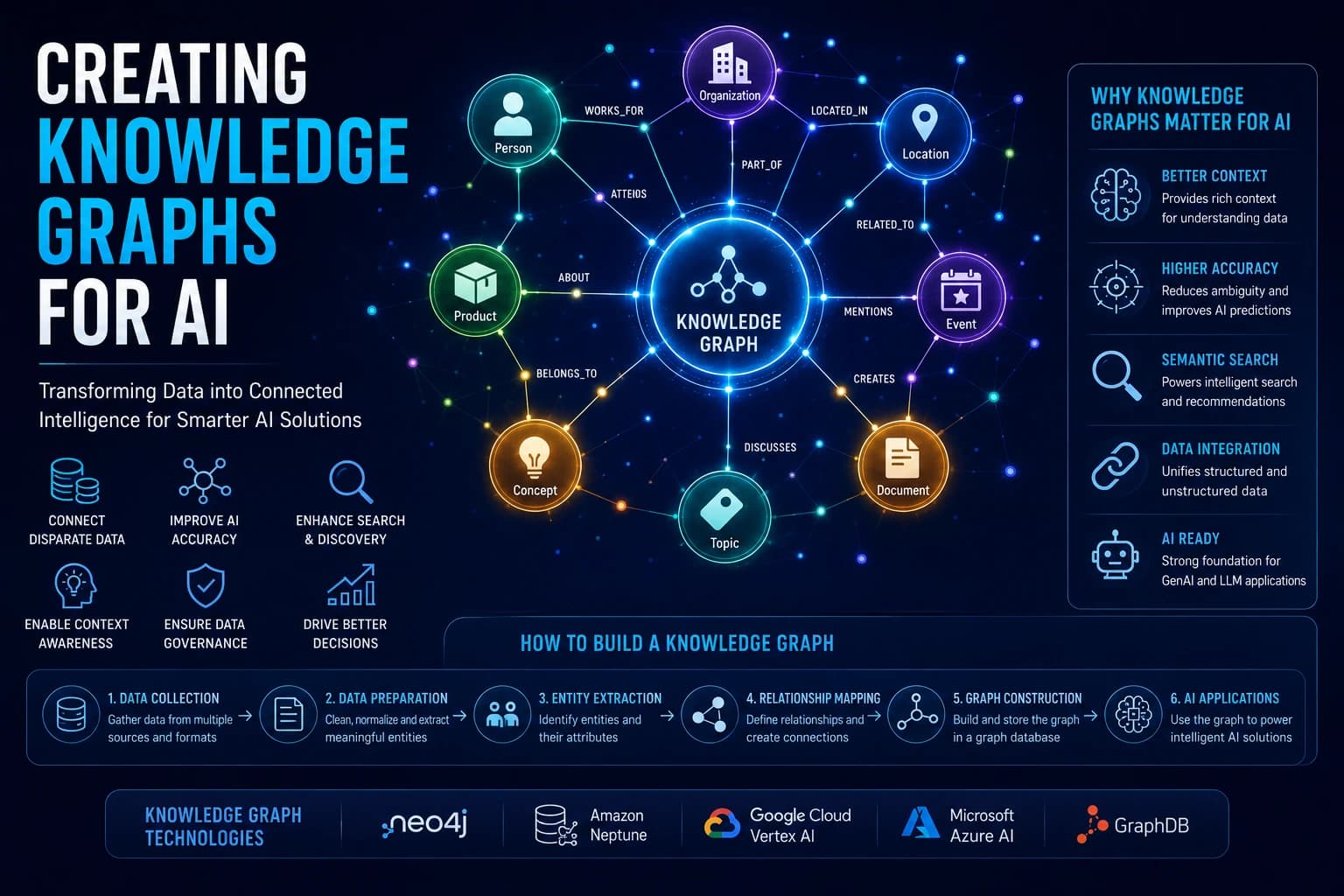
| Technical Focus | Core Web Vitals, crawlability, backlinks, meta tags | Schema.org, Entity relationships, llms.txt, knowledge graphs |
| Best For | Search traffic, navigational intent, and conversions | AI visibility, zero-click answers, and brand authority |
Where SEO Still Wins
SEO is far from dead. Traditional search is still heavily relied upon for:
- Navigational Queries: Users looking for a specific website or login portal.
- Transactional Queries: E-commerce purchases, software sign-ups, and booking services.
- Deep Research: When users want to read diverse opinions, compare reviews, and digest long-form guides.
Where AEO Wins
AEO dominates when the user wants an immediate, factual, and synthesized answer without scrolling through fluff.
- Informational Queries: "What is the capital of France?" or "How much does a custom AI agent cost?"
- Complex Synthesization: "Compare the pros and cons of Next.js vs React for an e-commerce platform."
- Troubleshooting: Quick step-by-step guides for technical errors or "how-to" questions.
AEO, GEO, and AI SEO: What’s the Difference?
You might hear these terms used interchangeably, but they have distinct meanings:
- AEO (Answer Engine Optimization): Focusing purely on structuring content to be extracted by answer engines as the definitive "truth" or direct answer.
- GEO (Generative Engine Optimization): A broader term encompassing the optimization of content to influence how Generative AI models (like Gemini or ChatGPT) construct their multi-source essays.
- AI SEO (AI Search Engine Optimization): The hybrid umbrella term that combines traditional SEO technical foundations with AEO/GEO tactics to ensure visibility across all modern search landscapes (including Google AI Overviews).
How Google AI Overviews, ChatGPT, and Perplexity Choose Sources
Unlike Google's traditional algorithm that relies heavily on PageRank (backlinks), AI search engines prioritize Information Retrieval (IR) confidence:
- Entity Clarity: Is the brand recognized as an authority on this specific entity?
- Data Structure: Is the data formatted in easy-to-parse tables, bullet lists, or JSON-LD schema?
- Semantic Relevance: Does the text directly answer the prompt without aggressive keyword stuffing?
- Consensus: Does the information match the general consensus of other high-authority sites?
Ready to dominate AI Search?
Don't lose your traffic to AI Overviews and Perplexity. Get a comprehensive audit of your website's AEO readiness.
AEO Technical Checklist
To migrate from traditional SEO to a robust AEO strategy, ensure your technical foundation is solid:
- [ ] Implement
llms.txt: Provide a clean, markdown-based summary of your site's core entities for AI crawlers.
- [ ] Deploy Schema Markup: Ensure
FAQPage, Article, Organization, and Service JSON-LD schemas are active.
- [ ] Optimize Readability: Use concise, 8th-grade reading level sentences for direct answers.
- [ ] Structure with HTML5: Use
<article>, <section>, <aside>, and logical H1-H6 hierarchy.
- [ ] Format for Crawlers: Avoid rendering critical text exclusively via complex client-side JavaScript.
Schema Markup Needed for AEO
While Google recommends schema for Rich Snippets, AI engines use it to understand context. The most critical schemas for AEO are:
FAQPage Schema: Direct questions mapping to direct answers.QAPage Schema: For community or forum-based answers.HowTo Schema: Step-by-step instructions.Organization / Person Schema: To build Entity Authority and Knowledge Graph presence.
Content Format Examples
Instead of writing a 3,000-word block of text, break your content into semantic chunks:
❌ Traditional SEO Format
"When it comes to understanding the cost of AI SEO services, it's a journey. Many businesses wonder about the pricing. In today's fast-paced world, generative AI search optimization can cost anywhere from a few thousand to much more..."
✅ AEO Format
"Average AI SEO Audit Cost:
- Basic Audit: $1,500 - $3,000
- Comprehensive Strategy: $5,000 - $10,000
- Enterprise Retainer: $3,000+/month
Costs depend on website size, current entity authority, and technical debt."
AEO Metrics: What to Track
Tracking AEO success is harder than tracking traditional clicks in Google Search Console. Focus on:
- Brand Mentions & Share of Voice: Are LLMs citing your brand when asked industry questions?
- Zero-Click Authority: Are users bypassing your site but converting later because they trust the AI's recommendation of your brand?
- Referral Traffic from AI: Monitor analytics for referral sources like
perplexity.ai, chatgpt.com, or claude.ai.
SEO + AEO Strategy Roadmap
- Audit Your Current Content: Identify your top 20 traffic-driving pages.
- Inject Direct Answers: Add a "Quick Answer" or "TL;DR" block to the very top of those pages.
- Restructure with Lists: Convert long paragraphs into bullet points and tables.
- Deploy Technical AEO: Add
llms.txt and robust JSON-LD schema to your platform.
- Monitor AI Visibility: Regularly prompt ChatGPT and Perplexity with your target keywords to see if you appear as a citation.
Common Mistakes
- Blocking AI Crawlers: Adding
GPTBot or ClaudeBot to your robots.txt disallow list means you will never be cited in their answers.
- Fluff Over Facts: LLMs filter out marketing jargon. Stick to verifiable facts, statistics, and objective comparisons.
- Ignoring Brand Authority (E-E-A-T): Answer engines rely on external signals. If your brand isn't mentioned on authoritative PR sites or Wikipedia, an LLM won't trust your proprietary data.
Frequently Asked Questions
1. Which one is more expensive, AEO or SEO?
They utilize similar resources (content creation and technical web development). However, AEO requires a deeper focus on technical data structuring (like JSON-LD), whereas SEO often requires ongoing budgets for link building and PR.
2. Can AEO generate leads?
Yes. AI engines like Perplexity provide citation links. Users who want deeper context will click those citations, bringing highly qualified, high-intent traffic directly to your site.
3. Should I block AI bots to protect my content?
Blocking bots (like GPTBot) prevents your content from being used to train models, but it also ensures you will never be cited as a source in their answers, giving your competitors a massive advantage in the AI search era.
4. Does Intellectual Clouds offer AEO services?
Yes. Our AI-SEO packages focus specifically on preparing enterprise websites for the AI search revolution, combining technical SEO with generative engine optimization.