HomeBlogGoogle's Agentic Gemini Strategy: Search, Apps, Video and AI Agents
AI SEO
Google's Agentic Gemini Strategy: Search, Apps, Video and AI Agents
Asim Ansari
June 27, 2026
37 min read
Explore Google's agentic Gemini strategy across Search, Android, Workspace, video creation, developer tools and personal AI agents, and what it means for businesses.
Quick Answer: Google's agentic Gemini strategy is about turning Gemini from a chatbot into an AI action layer across Google Search, Android, Gemini apps, Workspace, video tools, developer platforms and personal productivity. Instead of only answering questions, Gemini is being designed to understand intent, use context, connect with apps and help users complete tasks — with permission.
Gemini is not a chatbot anymore: Google is building Gemini as an action layer — an intelligence fabric that runs underneath Search, Android, Workspace, video creation and developer tools simultaneously.
Distribution is Google's moat: No AI company can match Google's reach across 3 billion Search users, 3 billion Android devices, 3 billion Gmail accounts and the YouTube ecosystem.
SEO is evolving into AEO: AI Mode in Search is already changing how content gets surfaced. Ranking on a results page matters less than being cited inside Gemini's generated answers.
Businesses must act now: The shift from keyword search to intent-based agentic AI means brands need structured content, entity clarity, schema markup and trusted source authority — before the transition becomes irreversible.
What Is Google's Agentic Gemini Strategy?
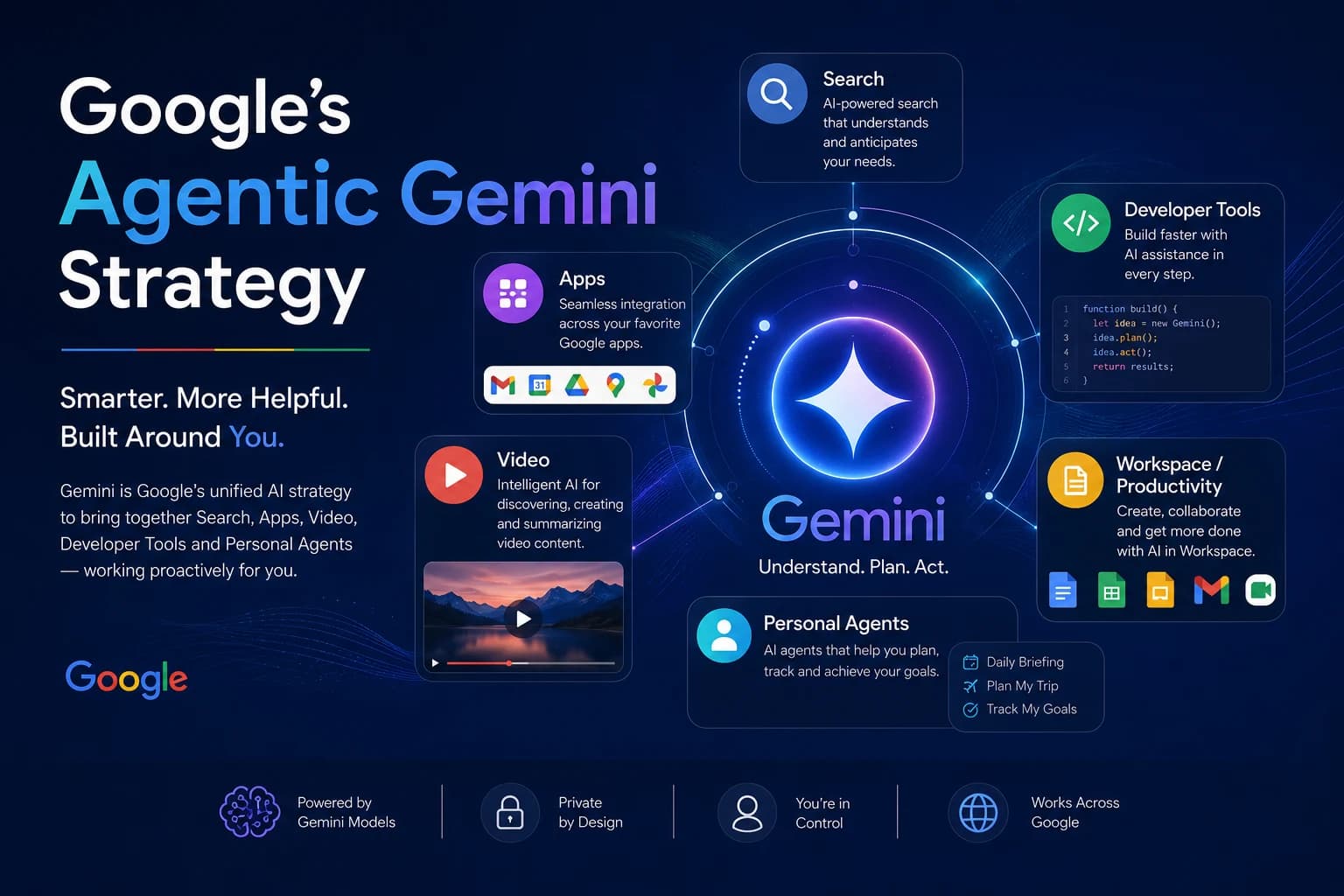
Google's agentic Gemini strategy is the company's long-term plan to transform Gemini from a standalone AI assistant into the intelligence layer embedded across every Google product and surface. Rather than building one powerful chatbot, Google is threading Gemini into Search, Android, Workspace, Gemini apps, video creation tools, developer platforms and personal productivity workflows — turning it into what analysts are calling an AI action layer.
The core shift is this: Gemini is not just answering questions. It is being designed to complete tasks. It reads your Gmail, checks your Calendar, searches the web, generates a video, writes a document and books a meeting — all in a single conversational thread, with your permission. That is the definition of agentic AI: AI that takes actions on your behalf, not just AI that talks to you.
This distinction matters enormously for businesses, content creators, SEO professionals and anyone building digital presence in 2026. When Gemini becomes the interface between users and their digital tasks, the old model of ranking pages on a search results list stops being the primary battleground.
Is Your Business Ready for Agentic AI Search?
Intellectual Clouds helps businesses optimize content, schema, knowledge graphs, AI visibility and automation workflows for Google AI Mode, Gemini, ChatGPT, Perplexity and the next generation of AI agents.
From Chatbot to Action Layer: The Fundamental Shift
When Google launched Bard in 2023, the framing was clear: a conversational AI to compete with ChatGPT. By the time Google rebranded to Gemini in early 2024 and released Gemini 2.0 at the end of that year, the framing had changed entirely.
Google officially described Gemini 2.0 as a model built for the "agentic era." That phrase is not marketing language. It signals a deliberate architectural philosophy: Gemini is designed with multimodal inputs and outputs (text, image, audio, video, code), native tool use, real-time web access, and deep integration with Google's own product ecosystem through Project Astra and Project Mariner.
The old model of AI was: user asks → AI answers. The agentic model is: user states a goal → AI reasons, plans, retrieves information, uses tools, and completes the task across multiple steps. That distinction is the entire foundation of Google's Gemini strategy.
Old Google AI Model
Agentic Gemini Model
Search results pages (10 blue links)
AI-generated answers + task workflows
Apps as separate, siloed tools
Apps connected through a shared AI layer
Manual user actions step by step
Assisted and agentic multi-step actions
Keyword-based query matching
Intent-based reasoning and planning
Static assistant, reactive responses
Context-aware personal agent, proactive
Why Google Has a Structural Distribution Advantage
Every major AI lab is building powerful models. OpenAI has GPT-4o and o3. Anthropic has Claude 3.5 Sonnet. Meta has Llama. But none of them have what Google has: distribution at planetary scale.
Google Search processes more than 8.5 billion queries per day. Android powers approximately 3 billion active devices. Gmail has over 1.8 billion users. YouTube is the world's largest video platform. Google Maps has over 1 billion monthly users. Google Workspace is used by more than 3 billion people across personal and professional accounts.
When Google integrates Gemini into these surfaces, it is not acquiring new users. It is activating an existing network of billions of people who already trust Google products in their daily lives. No competitor can replicate this without building those distribution channels from scratch — which takes decades.
This is why Google's agentic Gemini strategy is not just about building a better model. It is about making Gemini the operating layer that users interact with across every digital task, already embedded in the tools they already use.
Search: From Answering Queries to Completing Tasks
Google Search has been the internet's primary navigation layer for 25 years. The agentic Gemini strategy is rewriting what Search fundamentally does.
AI Mode and the Future of Search
AI Mode in Google Search uses Gemini to handle complex, multi-part questions, follow-up queries, reasoning-based research, and multimodal inputs like images and voice. Rather than returning a list of pages for the user to explore, AI Mode generates a synthesized, reasoned answer — and cites its sources.
Google has reported that AI Overviews (the predecessor to full AI Mode) were being used by more than one billion people per month as of early 2026. AI Mode extends that capability significantly, allowing users to ask deeply complex queries and receive answers that pull from multiple sources, perform multi-step reasoning, and offer follow-up conversation.
For SEO professionals, this is the most disruptive development in search history since the original PageRank algorithm. The question is no longer "Can I rank on page one?" The question is "Will Gemini cite me in AI Mode?"
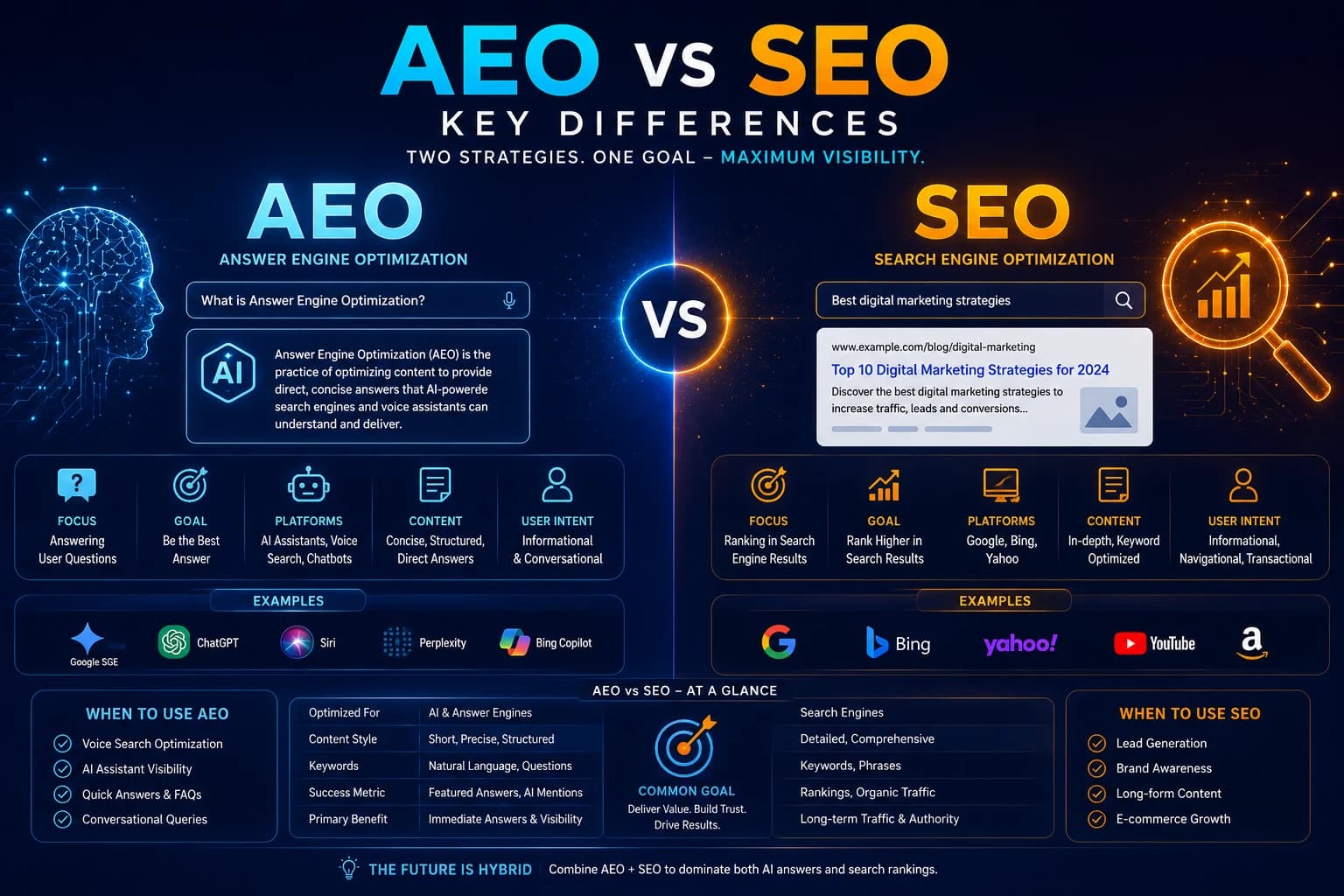
The answer to that question depends not on traditional ranking signals but on structured content, entity clarity, factual accuracy, source authority and Answer Engine Optimization — which we cover in depth in our guide to what AEO is and how it differs from SEO.
Gemini App and Connected Apps: Your Personal AI Interface
The Gemini app is Google's primary consumer-facing AI interface — the surface where users interact directly with Gemini for personal productivity, creative tasks, research, coding and conversation. But the Gemini app's strategic value goes far beyond the conversation window.
Gemini Connected Apps
Gemini Connected Apps is one of the most significant product decisions in Google's recent history. With user permission, Gemini can read, reason about and take action across ten core Google services — turning the Gemini app into a unified control layer for your entire digital life.
Gmail
Read, draft & organize emails
Google Calendar
Schedule events & find time slots
Google Docs
Read, edit & create documents
Google Drive
Search, organize & retrieve files
Google Keep
Create & retrieve notes
Google Tasks
Create & manage task lists
Google Photos
Search images by context
YouTube
Summarize & find video content
Google Maps
Directions, places & routes
Third-party Apps
Extensions & API integrations
This means a user can say to Gemini: "Find the proposal I sent last week, check if the client has responded to my last email, and draft a follow-up if they haven't." Gemini reads Drive, reads Gmail, reasons about the situation, and takes action. That is not a chatbot. That is an agent.
For businesses, this has direct workflow automation implications. Any process that previously required a human to manually switch between Gmail, Calendar, Docs and Drive can potentially be delegated to a Gemini agent workflow.
Android: The Proactive AI Surface
Android is where Google's agentic Gemini strategy becomes most personal and persistent. Unlike desktop applications or browser-based tools, Android is with users at all times. It sees what apps are open, what content is on screen, what notifications arrive and what the user's location and context are.
Gemini on Android is being built to be context-aware rather than query-dependent. Instead of requiring users to open the Gemini app and ask a question, Gemini on Android can surface relevant assistance based on what is on the screen at any moment — a capability demonstrated in Project Astra and now being rolled into production Android features.
This represents a fundamental shift in how users interact with their devices. Rather than switching between apps to complete a task, users can describe what they need to accomplish and Gemini orchestrates the apps on their behalf. The device stops being a collection of separate tools and becomes a unified, AI-mediated operating environment.
Workspace: Business Automation at Scale
Google Workspace — which includes Gmail, Docs, Sheets, Slides, Drive, Meet and Calendar — serves over 3 billion users across personal and enterprise accounts. Gemini integration into Workspace is where Google's agentic strategy has the most immediate and measurable business impact.
Gemini in Workspace can currently:
Summarize long email threads in Gmail
Draft complete documents, reports and presentations from a prompt in Docs and Slides
Analyze spreadsheet data and generate insights in Sheets
Transcribe and summarize Meet recordings automatically
Surface relevant files and information proactively in Drive
The enterprise tier of Workspace with Gemini goes further: it can connect across the full Workspace suite, reason about business data, and automate multi-step workflows. A sales team can ask Gemini to pull last quarter's deal data from Sheets, draft a performance summary in Docs, and prepare a slide deck for the board review — as a single instruction.
This is the operational definition of an AI action layer in a business context. Gemini is not replacing humans in creative or strategic work. It is eliminating the friction of routine coordination tasks that consume hours of productive time every week.
Video Creation: Flow, Veo and Gemini
One of the most striking demonstrations of Google's agentic strategy is in creative media. Google Flow is an AI filmmaking tool built on the foundation of three models working together: Veo for video generation, Imagen for image generation, and Gemini for reasoning, direction and scene composition.
With Flow, a user can describe a scene in natural language and receive a coherent, high-quality video clip. More importantly, they can then refine it through conversation — asking Gemini to adjust the lighting, change the pacing, modify the character's position, or add a specific visual element — and receive an updated clip without re-generating from scratch.
This is not just a video generation tool. It is a demonstration that Gemini can reason about visual content, maintain continuity across creative iterations, and act as a creative collaborator rather than a one-shot generation engine. The agentic AI principle applies even to creative work: the AI maintains context, takes multi-step actions and responds to direction.
For marketing teams, content studios and creative agencies, the implication is significant. Video production that previously required teams, equipment and editing software can now be prototyped in minutes. The creative workforce shifts from execution to direction — telling the AI what to build rather than building it manually.
Developer Agents and Enterprise Agent Platforms
Google's agentic Gemini strategy extends deep into the developer and enterprise ecosystem through Vertex AI — Google's managed AI platform — and Google Agent Development Kit (ADK).
Vertex AI allows enterprises to build, deploy and orchestrate custom AI agents using Gemini as the core reasoning model. These agents can be connected to enterprise systems — CRM platforms, ERP systems, internal databases, ticketing systems — and designed to automate specific business workflows.
The enterprise agent platform supports:
Multi-agent orchestration — multiple specialized agents working in parallel on a complex task
Tool use and API calling — agents that retrieve real data from external systems
Human-in-the-loop controls — workflows that pause for human approval at key decision points
Audit and compliance logging — tracking every agent action for governance requirements
This is where Gemini becomes directly competitive with enterprise automation platforms like Salesforce Agentforce, Microsoft Copilot and ServiceNow AI. The difference is that Google's platform is built on Gemini's native multimodal capabilities, meaning enterprise agents can reason about text, images, audio and structured data simultaneously.
Personal AI Agents: The Endgame
The logical endpoint of Google's agentic Gemini strategy is the personal AI agent — a single persistent AI entity that knows you, remembers your preferences, understands your context, manages your tasks, connects to all your apps, and works continuously on your behalf.
Google has been developing this concept under Project Astra, which demonstrated a real-time, multimodal AI assistant that could see through a phone camera, understand a live environment, answer questions about what it sees, remember context across a conversation, and take action on connected apps.
The personal agent knows that you have a flight on Thursday, that your client's proposal is due Friday, that your preferred lunch spot is closed on Mondays, and that you asked it last week to remind you to follow up on a contract. It surfaces that information when relevant, without being asked. It acts like a highly intelligent chief of staff who never forgets, never loses context and is available around the clock.
This is not a 2030 vision. The foundational capabilities are being deployed now. Gemini's memory features, Connected Apps integrations, Android context awareness and Workspace automation are all building blocks of the personal agent experience. The full product is being assembled piece by piece.
What This Means for SEO and AEO
The agentic Gemini strategy has direct and urgent implications for how businesses approach organic search visibility.
Traditional SEO was built on a simple premise: rank a page at the top of Google's results for a target keyword, and users click through to your site. That model worked because users were the decision-makers — they saw the list and chose which page to visit.
In the agentic AI model, Gemini is the decision-maker. It reads multiple sources, synthesizes the information, and presents a single answer. The user may never see a list of ten results. They receive Gemini's answer — and the sources Gemini chooses to cite appear at the bottom.
This is the shift from SEO to Answer Engine Optimization (AEO): the practice of engineering content so that AI systems select it as a cited source.
What Determines AEO Visibility in Gemini
Entity clarity: Does Gemini understand who you are, what you do, and why you are authoritative? This requires structured About pages, Organization schema, Person schema and clear entity relationships.
Structured content: Is your content organized so Gemini can extract precise facts? This requires semantic HTML, BLUF answer blocks, tables, and clear heading hierarchies.
Schema markup: Do you have JSON-LD schemas that explicitly state your brand facts, services, FAQs and organizational details?
Factual accuracy: Does your content align with what Google's knowledge graph knows about the topic? Contradictions reduce citation probability.
Source authority: Do other trusted sources reference your brand, cite your content, or link to your pages? Third-party authority signals matter for AI trust.
Helpful content alignment: Does your content directly answer user questions without requiring significant inference? AI systems prefer direct, declarative answers.
SEO shifts toward AEO; fewer click-throughs from SERP
Gemini App
Personal assistant with memory and context
Brand awareness through AI mentions and citations
Connected Apps
Gmail, Calendar, Docs, Drive integration
Internal productivity automation and workflow efficiency
Android
Screen and context-aware on-device assistance
New touchpoints for app engagement and discovery
Workspace
Business productivity and document automation
Significant time savings; faster content production
Flow / Veo
AI-directed video and image creation
Faster creative production; reduced production costs
Vertex AI / Agents
Build enterprise-grade AI agents and workflows
AI workflow orchestration across business operations
The strategic framing for any business leader should be this: Google Gemini is becoming the interface between users and digital tasks. Businesses must optimize not only for search rankings, but for AI answers, connected apps, agent workflows and entity trust.
Practically, this means:
Audit your brand entity presence — Does Gemini know who you are and what you do accurately? Check by asking Gemini directly about your brand.
Implement comprehensive schema — Article, Organization, Person, FAQPage, BreadcrumbList, TechArticle, HowTo and DefinedTerm schemas are all signals that structured AI systems use.
Restructure content for direct extraction — Every major section should open with a direct, 40-60 word answer. Don't bury the point. See our guide on AI infrastructure best practices for technical architecture guidance.
Build topic authority clusters — Gemini cites sources that demonstrate comprehensive authority on a topic, not just individual high-ranking pages.
Establish E-E-A-T signals — Named authors, published credentials, external citations and verifiable expertise are trust signals for AI systems, not just for Google's traditional ranking algorithms.
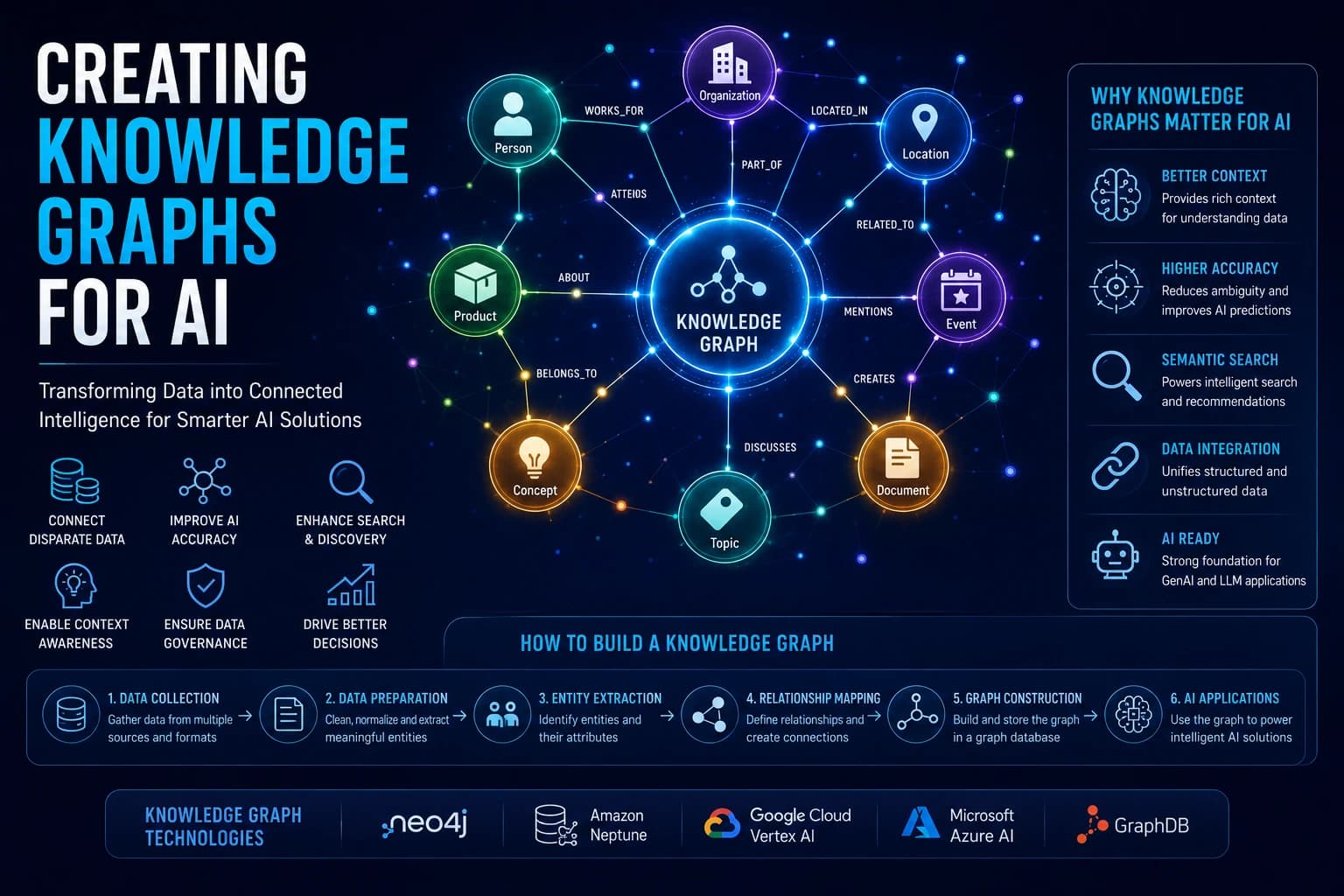
Create knowledge graph assets — Structured entity pages, inter-linked content, and consistent factual representation across the web help Gemini build a reliable model of your brand. Our guide on creating knowledge graphs for AI covers this in detail.
Risks: Trust, Privacy, Reliability and Web Traffic
A balanced assessment of Google's agentic Gemini strategy must acknowledge the real risks it introduces — for users, for the web ecosystem, and for businesses.
Web traffic displacement: As Gemini answers more queries without requiring users to click through to source pages, website traffic from organic search will decline for many publishers. This is already being measured in AI Overviews data. The question for businesses is whether being cited in Gemini's answer is sufficient compensation for lost click-through traffic.
AI hallucination and brand risk: Gemini, like all large language models, can generate plausible-sounding but factually incorrect information about brands, people and organizations. If Gemini incorrectly describes your services, pricing, location or leadership, that misinformation reaches users before they ever visit your site. We cover this risk in depth in our article on AI hallucinations and brand risk.
Privacy and data access: The power of Gemini's Connected Apps is also its privacy risk. When Gemini reads Gmail, Drive, Calendar and Photos, it has access to deeply personal information. Google has implemented permission controls and data use policies, but enterprise and individual users must evaluate their comfort with AI systems having that access.
Reliability and task accuracy: Agentic AI systems that take actions — not just generate text — introduce a new category of error risk. If a Gemini agent drafts and sends an email incorrectly, or schedules a meeting at the wrong time, the consequences are real. Current implementations include human-in-the-loop checkpoints, but as automation deepens, reliability standards must rise proportionally.
Competitive consolidation: Google's distribution advantage means that as Gemini becomes the dominant AI layer, it becomes harder for competing AI services to reach users who are already getting AI assistance from within their existing Google product suite. This raises legitimate questions about market competition and the openness of the AI ecosystem.
Google Gemini Strategy Checklist for Businesses
What Businesses Should Do Now
✓ Ask Gemini and ChatGPT about your brand today — audit what AI systems currently say about you
✓ Implement Organization, Person, Article and FAQPage JSON-LD schema on all key pages
✓ Rewrite service and about pages as entity-rich, factually explicit documents
✓ Add BLUF answer blocks (40-60 words) at the start of every major content section
✓ Build topic authority clusters with comprehensive internal linking and descriptive anchor text
✓ Allow Google's AI crawlers and all major AI search bots in your robots.txt
✓ Create or update your /llms.txt file with a structured AI-readable site directory
✓ Establish named author profiles with Person schema, credentials and external citations
✓ Evaluate Gemini for Workspace for internal productivity automation
✓ Monitor AI citation mentions of your brand monthly and correct factual errors through entity optimization
Frequently Asked Questions
What is Google's agentic Gemini strategy?
Google's agentic Gemini strategy is about transforming Gemini from a conversational AI assistant into an action layer embedded across Google Search, Android, Workspace, Gemini apps, video creation tools and developer platforms. The goal is for Gemini to not just answer questions but to complete tasks across multiple apps and services on the user's behalf.
What does agentic AI mean?
Agentic AI refers to artificial intelligence systems that can take autonomous, multi-step actions toward a goal — rather than simply responding to a single prompt. An agentic AI reasons about a task, plans the steps required, uses external tools or services, and executes those steps sequentially to complete a complex objective.
How is Gemini different from a chatbot?
A traditional chatbot responds to individual messages in a single conversation. Gemini, in its agentic form, maintains persistent memory, understands context across sessions, connects to external apps and services, executes multi-step tasks and takes real-world actions like drafting emails, scheduling meetings or generating videos — with user permission.
How does Gemini change Google Search?
Gemini changes Google Search by enabling AI Mode, which generates synthesized, reasoned answers to complex queries rather than returning a list of links. Users receive a conversational response with cited sources. This shifts the search experience from page ranking to AI citation, and requires businesses to optimize for AEO rather than traditional SEO.
What is AI Mode in Google Search?
AI Mode is a Gemini-powered search experience within Google Search that handles complex, multi-part queries, follow-up questions and multimodal inputs. Instead of returning ten blue links, it generates a structured, conversational answer drawn from multiple sources — similar to how Perplexity or ChatGPT Search work, but embedded within Google's existing search interface.
How do Gemini Connected Apps work?
Gemini Connected Apps allow Gemini to access and take actions within Gmail, Google Calendar, Docs, Drive, Keep, Tasks, Photos, YouTube, Maps and other services — with explicit user permission. Once connected, users can ask Gemini to perform cross-app tasks like summarizing an email thread, drafting a document, or finding a file, without switching between apps manually.
How does Gemini affect SEO and AEO?
Gemini's integration into Search through AI Mode means that the primary visibility battleground is shifting from traditional page rankings to AI citations. AEO (Answer Engine Optimization) focuses on making your content the source that Gemini chooses to cite in its generated answers. This requires structured content, entity clarity, schema markup and source authority — different signals than traditional keyword SEO.
What are personal AI agents?
Personal AI agents are persistent AI systems that know an individual user's preferences, goals, calendar, relationships and context — and take proactive actions on their behalf across multiple apps and services. Google's vision for Gemini as a personal agent, demonstrated through Project Astra, is for it to function like a continuous, intelligent chief of staff that works across every digital task.
What risks come with agentic AI?
Key risks include web traffic displacement as AI answers reduce click-throughs to websites, AI hallucination generating inaccurate brand information, privacy concerns from deep app access, reliability issues when agents take incorrect actions, and competitive consolidation as Google's distribution advantage concentrates AI access within its ecosystem.
How can Intellectual Clouds help businesses prepare?
Intellectual Clouds provides AI SEO and AEO services including entity optimization, schema architecture, knowledge graph construction, structured content strategy and AI visibility audits — all designed to help businesses be cited in Google AI Mode, Gemini, ChatGPT and Perplexity answers rather than just ranked on traditional search result pages.
How Intellectual Clouds Can Help
The shift from traditional search to agentic AI is not a future event. It is happening right now, at scale, with over a billion users already experiencing AI-generated answers in Google Search through AI Overviews and AI Mode.
Businesses that wait for the transition to complete will find themselves optimizing for a visibility environment that has already moved on. The organizations that act now — building entity clarity, structured content systems, schema architecture and knowledge graph assets — will establish the AI citation authority that becomes exponentially harder to build from scratch once AI systems have already formed stable models of brand identity.
At Intellectual Clouds, we have built a systematic approach to AEO and AI SEO that addresses every layer of this challenge. Our AI SEO services cover entity optimization, comprehensive schema implementation, knowledge graph construction for AI systems, structured content architecture, and ongoing AI citation monitoring. We help businesses understand not just where they rank on Google, but what Gemini, ChatGPT and Perplexity currently say about them — and how to ensure those answers are accurate, authoritative and consistently favorable.
We also help organizations evaluate Gemini for Workspace, Vertex AI agent deployment and AI workflow automation — connecting the content visibility layer with the operational efficiency layer that Google's agentic strategy opens up.
Conclusion
Google's agentic Gemini strategy represents the most significant structural change to the digital landscape since the mobile revolution. Gemini is moving from answering questions to completing tasks, from a chatbot to an action layer, from a search feature to a persistent intelligence fabric woven through every Google product.
For businesses, the strategic imperative is clear: Google Gemini is becoming the interface between users and their digital work. The question is not whether your business will be affected — it will be. The question is whether your brand, your content and your entity presence are prepared to be cited, trusted and recommended by the AI layer that is becoming the primary interface for billions of users.
The businesses that optimize for AEO, build entity authority, implement structured schema and establish AI-readable content systems today will hold a durable advantage as Gemini's reach expands across Search, Android, Workspace, video creation and personal agents. The time to prepare is not when the transition is complete. The time is now.
Prepare Your Business for Agentic AI Search
Intellectual Clouds helps businesses optimize content, schema, knowledge graphs, AI visibility and automation workflows for Google AI Mode, Gemini, ChatGPT, Perplexity and the next generation of AI agents.
Asim Ansari is the Founder of Intellectual Clouds and a Certified Salesforce Administrator and Pardot Specialist with 17+ years of experience across Salesforce CRM, AI automation, cloud infrastructure (AWS), and digital transformation. He writes on AI agents, Salesforce delivery, Answer Engine Optimisation (AEO), and AI-accelerated business operations.