HomeBlogGPT-6 Intelligent UI: Is ChatGPT Becoming an App Platform, Not Just a Chatbot?
AI Agents
GPT-6 Intelligent UI: Is ChatGPT Becoming an App Platform, Not Just a Chatbot?
Asim Ansari
October 20, 2026
24 min read
GPT-6 Intelligent UI moves ChatGPT beyond text into dynamic interactive components, task tools, and connected apps. Discover what the shift from chatbot to app platform means for enterprise software.
Quick Answer: GPT-6 Intelligent UI moves ChatGPT beyond static text-only replies by assembling native, streamable interactive components (such as dynamic calculators, data visualizers, filterable tables, and multistep task tools) directly inside a conversation. This shift does not replace core enterprise software. Instead, it transforms natural language into an adaptive, conversational entry point for data, tools, and governed business actions.
By Asim Ansari|Published: October 20, 2026|Last updated: October 20, 2026|9 min read
Executive Summary & Core Takeaways
1. Beyond Static Text
Intelligent UI empowers OpenAI models to dynamically render interactive controls, configuration sliders, charts, and form cards right into the conversation flow.
2. Apps SDK & MCP Backbone
Powered by the open Model Context Protocol (MCP), the OpenAI Apps SDK allows external services to inject backend data and interactive widgets directly into ChatGPT.
3. Adaptive Task Surface
Instead of forcing employees to navigate complex SaaS menus, conversational intent dynamically generates the exact ephemeral interface required for the immediate job.
4. Enterprise Governance
Dynamic UI does not replace backend security. Hardened tool contracts, OAuth identity verification, field-level permissions, and human confirmation gates remain mandatory.
For years, generative AI interfaces followed an identical pattern: a user typed a prompt into a text box, waited a few seconds, and received a wall of paragraphs or markdown bullet points. While useful for drafting emails or summarizing documents, this text-first paradigm created immediate friction when users attempted to complete multi-step work, analyze financial data, or execute software tasks.
With the rollout of GPT-6 Intelligent UI, OpenAI is fundamentally altering that interaction loop. ChatGPT is actively transitioning from an informational conversational bot into an adaptive, action-oriented task surface.
Understanding this transition is essential for product leaders, software architects, and enterprise technology executives.
What Is GPT-6 Intelligent UI?
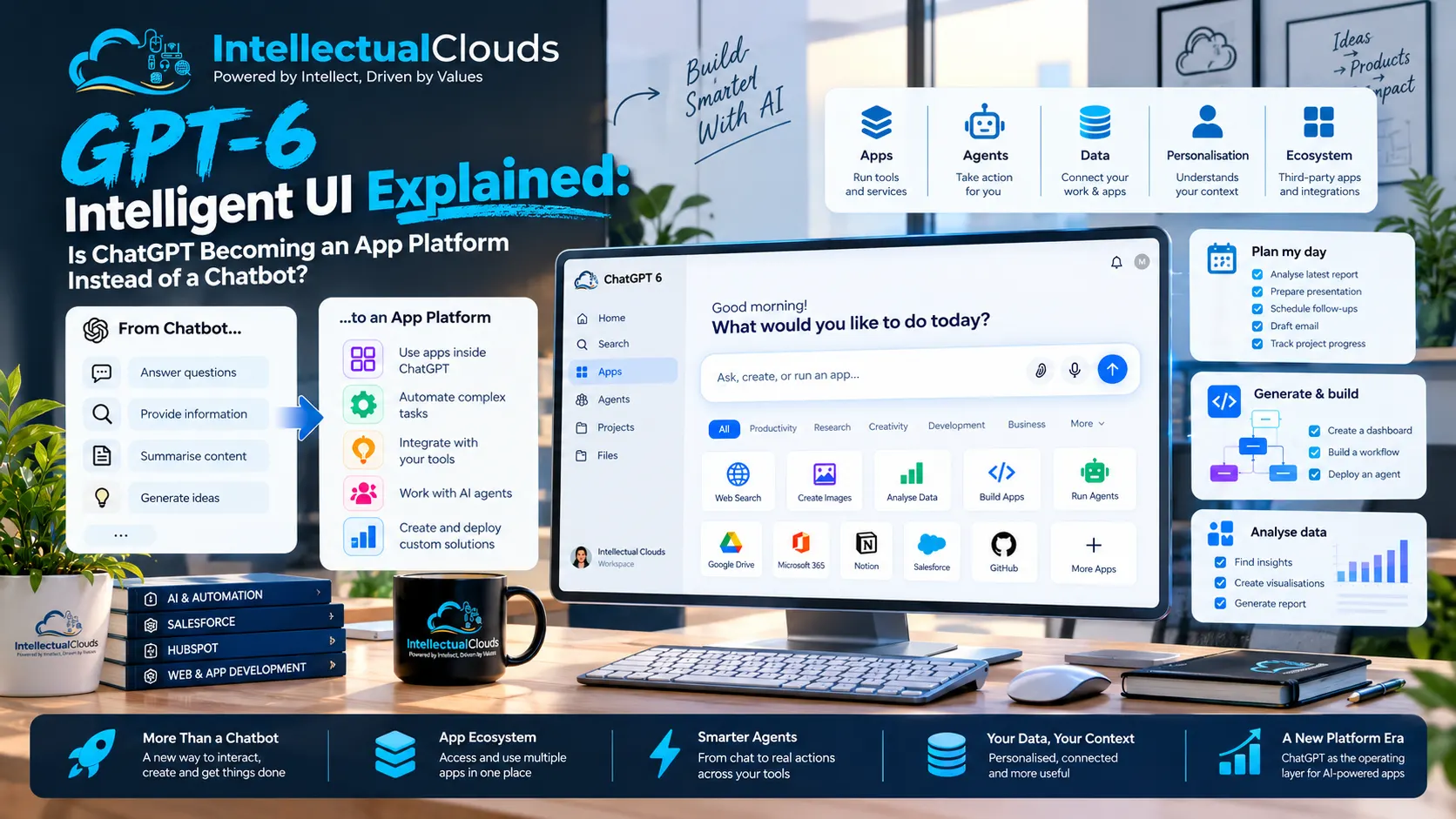
GPT-6 Intelligent UI is an architectural capability that allows the underlying AI model to select and assemble the most effective interface format for a given task. Rather than restricting output to prose, ChatGPT can render interactive UI components, live data charts, interactive configuration sliders, and transaction review cards directly in the chat feed.
According to technical documentation released by OpenAI, Intelligent UI operates via a compiled library of native, streamable components. As the model produces tokens, a client-side layout engine compiles and streams the interface in real time. The model evaluates user intent and selectively renders visuals only when interactivity improves comprehension or accelerates task completion. Review the official announcement at OpenAI: GPT-6 and Intelligent UI.
Execution Architecture • Intent to Streamable UI
01
User Natural Language Request
"Compare our Q3 vs Q4 churn rates and model a 5% retention lift."
Natural Intent
02
GPT-6 Intent Reasoner & Tool Orchestration
Identifies analytical modeling intent and required mathematical transformations
Executes verified query via secure MCP Analytics Connector
Selects optimal presentation: Combines synthesis text with an interactive scenario slider
Stream A: Textual Synthesis
Executive narrative detailing primary churn drivers across EMEA enterprise accounts, customer cohort findings, and key retention opportunities.
Stream B: Intelligent UI Component
Interactive dual-axis chart with real-time retention sliders, allowing the user to dynamically adjust variables and test ARR impact live.
Consider common everyday workflows where Intelligent UI replaces static text:
01. Financial Scenarios
Asking about investment or retirement projections generates an interactive compounding interest calculator with adjustable monthly contribution sliders and live return curves.
02. Supply Chain & Logistics
Inquiring about shipment bottlenecks renders an interactive transit map with route status toggles, weather overlays, and warehouse inventory drilldowns.
03. Product Comparisons
Evaluating enterprise software tiers produces an interactive side-by-side matrix with custom feature filtering, compliance checkboxes, and cost calculators.
04. Plain Language Precision
When a direct conceptual explanation or code snippet is optimal, the model retains clean, readable prose without forcing unnecessary UI clutter.
The Core Shift: From a Chat Window to an Adaptive Task Surface
ChatGPT is not replacing operating systems, nor will a chat bubble replace all specialized enterprise software. The true paradigm shift is that conversation is becoming the primary orchestration layer for modern software applications.
This evolution operates across three structured layers:
Layer 1
Natural Language Intent
The operator communicates their objective in conversational business terms rather than navigating deep multi-level menus. Natural language abstracts system complexity.
Layer 2
Context & Governed Tooling
The model connects to permissioned enterprise silos, REST endpoints, and CRM databases via standard protocols like the Model Context Protocol. Learn more in our guide on custom AI agents for Salesforce.
Layer 3
Adaptive Component Rendering
The platform dynamically constructs an ephemeral workspace tailored specifically to the immediate task, giving the operator intuitive visual controls to inspect, adjust, and approve actions.
This transition bridges the gap between text generation and software execution. Instead of copying data from a chatbot into a spreadsheet or ERP system, the work happens in place.
Is ChatGPT Becoming an App Platform?
Yes, ChatGPT is actively becoming a commercial application platform.
ChatGPT already supports connected applications that inject authorized enterprise data and capabilities into live sessions. Depending on subscription tier, workspace permissions, and enterprise policies, users can search internal documentation, run deep codebase analysis, and trigger downstream automations. For operational details, refer to OpenAI: Connected Apps in ChatGPT.
Furthermore, OpenAI has made its Apps SDK available in developer preview. The Apps SDK extends the open-source Model Context Protocol (MCP), providing developers with standard specifications to define custom chat behaviors, stateful UI widgets, and secure backend integrations.
With OpenAI accepting third-party submissions for its app directory, software vendors face an emerging distribution ecosystem similar to early mobile app stores. Explore the developer documentation at OpenAI: Build with the Apps SDK.
Below is the MCP Tool Schema that defines an interactive order resolution card for an e-commerce brand, visualized as a modern parameter model and rendered widget:
This changes the competitive landscape. Software providers can no longer assume that users will always log into their proprietary web portals. Businesses must prepare to deliver functionality directly inside conversational hubs.
Comparison: Traditional Chatbots vs. ChatGPT App Platform
To clarify why this shift matters, review the core architectural differences:
Dimension
Traditional Chatbot (2020-2024)
ChatGPT App Platform (2026+)
Response Format
Static paragraphs, markdown text, rigid button trees
Streamable interactive components, real-time sliders, visual charts, forms
Data Architecture
Fixed pre-trained knowledge base or basic retrieval (RAG)
Live bidirectional synchronization with backend enterprise databases via MCP
Scope of Work
Frequently limited to customer support FAQs and basic triage
Multistep enterprise research, forecasting, code execution, order management
System Integrations
Isolated within a standalone website chat widget
Secure connections to ERPs, Salesforce CRM, Shopify, and enterprise APIs
User Experience
Monolithic interface hard-coded by product designers
Adaptive ephemeral workspace constructed dynamically to match user intent
Operational Risk
Hallucinations, repetitive loops, stale information
Data permission overreach, unverified tool execution, governance failures
Why Intelligent UI Matters for Enterprise Teams
Traditional enterprise applications are organized around complex menus, database tables, and static report builders. Operators spend significant time learning where data lives rather than applying insights.
Intelligent UI allows teams to query systems by intent and immediately interact with the results:
01. Engineering & SaaS
SaaS Product & Engineering Teams
Product teams must design software that is conversational-first. Instead of burying features beneath settings menus, software companies can expose capabilities as targeted MCP tools.
Sales and service teams frequently move between complex records and dashboards. An intelligent interface allows an executive to query at-risk accounts, view live pipeline cards, and trigger updates instantly.
Customer service teams are constantly overloaded by WISMO inquiries. An adaptive interface verifies shopper identity, displays live carrier tracking, and presents self-service return buttons within store policy.
As conversational platforms evolve into application layers, visibility shifts from traditional keywords to Answer Engine Optimization (AEO) and knowledge graph structuring.
The technological backbone enabling this shift is the Model Context Protocol (MCP), an open standard created to standardize how AI systems communicate with external data and tools. To understand how MCP unifies enterprise workflows, review our deep dive into Salesforce Claude integration with MCP.
Tool Definition: The organization exposes narrowly defined, deterministic tools (such as getAccountHealthScore(accountId)).
Context Passing: When user intent requires external data, ChatGPT invokes the approved MCP tool with typed arguments.
Structured Response: The backend returns structured JSON payload data alongside UI component hints.
Adaptive Rendering: Intelligent UI compiles the payload into an interactive visual widget within the conversation.
Confirmation & Audit: Any consequential action (such as issuing a refund or updating a contract) requires human confirmation and writes an immutable entry into enterprise audit logs.
6-Step Implementation Framework for Technology Leaders
Deploying conversational interfaces requires strict software engineering discipline. Follow this 6-step framework to transition safely from prototype to production:
01
Select High-Frequency, High-Value Intents
Avoid building open-ended AI tools that attempt to handle everything. Focus on repetitive, measurable workflows such as contract gap analysis, order fulfillment updates, invoice approvals, or CRM pipeline health checks.
02
Define Strict Tool Contracts
Ensure every tool has a single responsibility with strict JSON schema validation. Never give an AI agent raw, unrestricted SQL or database access. Tools must execute strictly within the permissions of the verified operator.
03
Enforce Deterministic Policy Controls
The AI model should reason about intent, but business logic must execute deterministically on the server. If an enterprise policy dictates that orders over 30 days old cannot be returned, that rule must be enforced in code, not left to model discretion.
04
Implement Human-in-the-Loop Confirmation Gates
Financial transactions, database modifications, external communications, and permission changes must require an explicit user confirmation step. The UI should display the exact parameters of the action before execution.
High message volume is not a sign of productivity. Track meaningful operational KPIs: task completion rate, resolution time reduction, error deflection, and user satisfaction.
Enterprise Governance & Risk Management
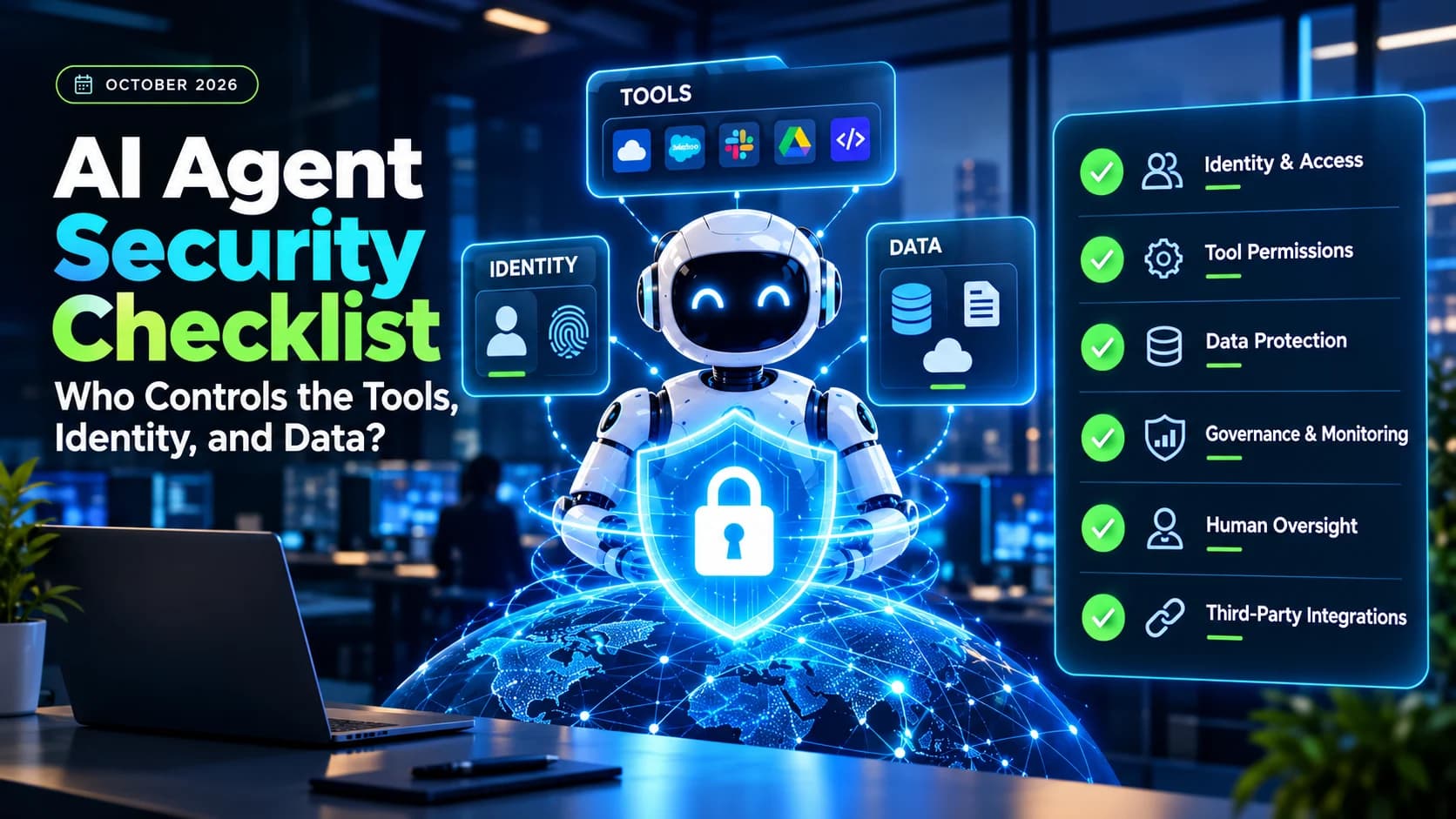
Deploying conversational interfaces introduces specific risks that enterprise IT security teams must mitigate:
Risk Category
Operational Vulnerability
Recommended Control
Over-Privileged Data Access
An agent retrieves sensitive customer records or financial data outside the user's role.
Implement strict least-privilege tokens, user-level OAuth delegation, and field-level security.
Hallucinated Policy Commitments
The conversational model promises unauthorized discounts or delivery guarantees.
Enforce deterministic server-side policy validators and ground answers in verified tool output.
Unauthorized Tool Execution
Prompt injection attacks trick the model into triggering destructive API endpoints.
Require cryptographic signature verification, read-only defaults, and multi-factor confirmation gates.
Vendor Platform Lock-in
Proprietary UI code becomes obsolete when third-party chat platforms alter specifications.
Build on portable open standards like Model Context Protocol (MCP) to retain full backend independence.
Strategic Outlook: What This Means for Enterprise Software
The fundamental question facing technology leaders is not whether chat will eradicate standalone applications. Specialized enterprise software will always be required for complex administration, dense data entry, and deep reporting.
The real question is: Which parts of your application ecosystem should become conversational, connected, and adaptive?
Organizations that embrace this paradigm shift will remove friction between user intent and business execution. By pairing conversational models with governed APIs and dynamic components, companies can transform fragmented workflows into unified, intuitive task surfaces.
How Intellectual Clouds Can Help
Intellectual Clouds designs, architects, and implements production-grade AI software for fast-growing startups and global enterprises. Whether you are building custom AI agents, connecting Salesforce architectures via MCP, or automating customer support workflows, our senior engineering teams deliver reliable, secure solutions.
Our capabilities include:
Autonomous AI Agents
Production agent development with deterministic guardrails and live tool orchestration.
GPT-6 Intelligent UI is an advanced interface framework that allows AI models to dynamically assemble native, streamable interactive components such as charts, sliders, calculators, and task tools directly inside a conversation.
Is ChatGPT becoming an app platform?
Yes. By combining the Apps SDK, the open Model Context Protocol (MCP), and Intelligent UI, ChatGPT allows developers to deploy interactive applications that access backend data and execute tasks directly within the conversational feed.
What is the difference between Intelligent UI and ChatGPT Apps?
Intelligent UI refers to the dynamic component rendering capability of the model. ChatGPT Apps are external integrations built by developers that connect ChatGPT to private databases, APIs, and business workflows. The two work together to deliver interactive application experiences.
Does Intelligent UI eliminate the need for traditional software?
No. Traditional web, desktop, and mobile software remain necessary for complex data entry, system administration, and dense workflows. Intelligent UI acts as an agile conversational entry point for initiating and completing tasks across those systems.
How can businesses prepare for the shift toward conversational app platforms?
Organizations should identify high-frequency business workflows, structure internal APIs using open standards like the Model Context Protocol (MCP), enforce least-privilege security controls, and implement human confirmation steps for consequential actions.
Asim Ansari is the Founder of Intellectual Clouds and a Certified Salesforce Administrator and Pardot Specialist with 17+ years of experience across Salesforce CRM, AI automation, cloud infrastructure (AWS), and digital transformation. He writes on AI agents, Salesforce delivery, Answer Engine Optimisation (AEO), and AI-accelerated business operations.