HomeBlogAI Agent Security Checklist: Who Controls the Tools, Identity, and Data?
AI Agents
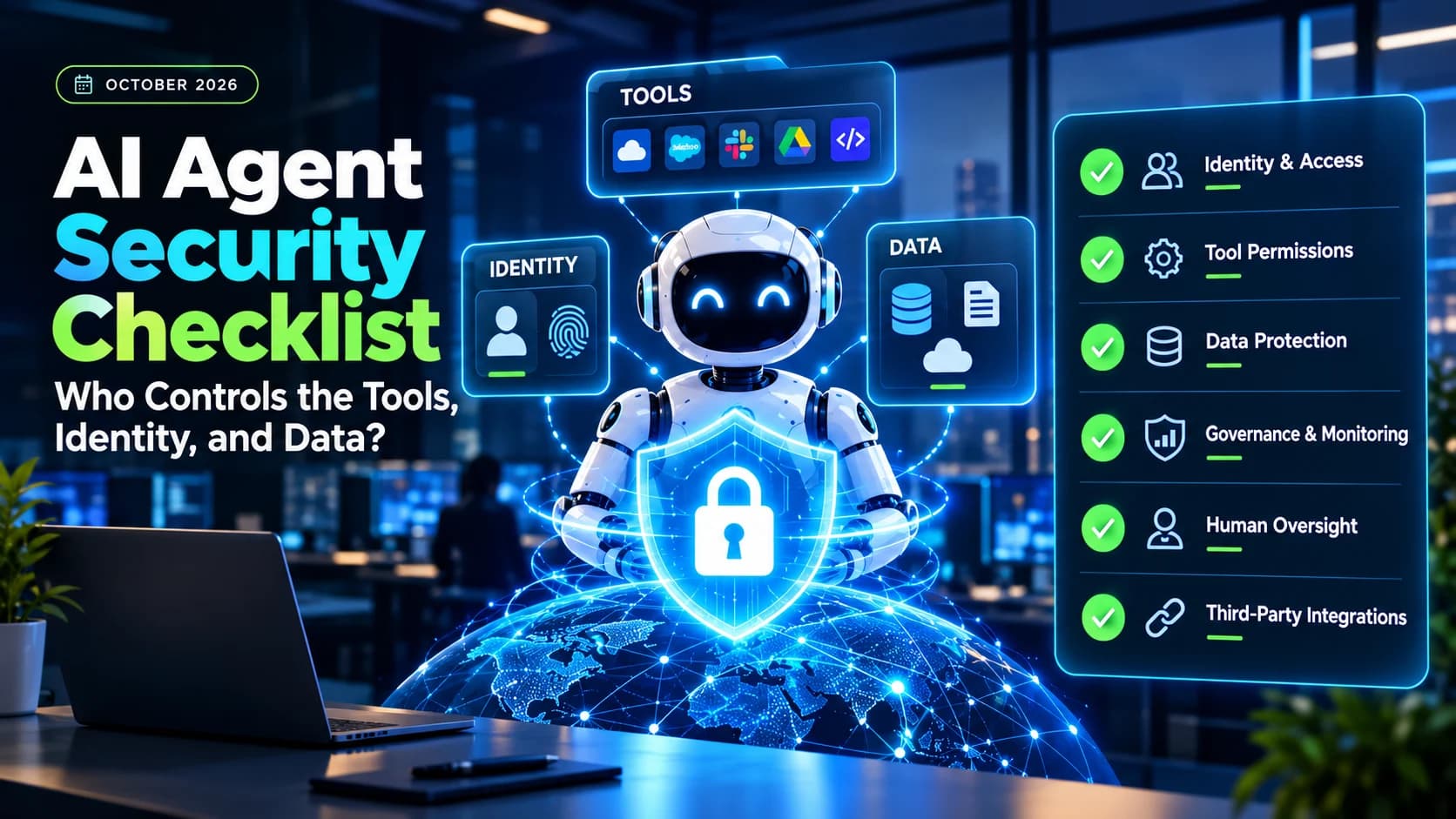
AI Agent Security Checklist: Who Controls the Tools, Identity, and Data?
Asim Ansari
October 10, 2026
26 min read
Use this AI agent security checklist to control tool permissions, agent identity, MCP connections, sensitive data, approvals, and monitoring before production deployment.
Quick Answer
A secure enterprise AI agent must have its own revocable identity, minimum required tool permissions, approved boundaries on input and output, restricted access to confidential data, deterministic human approval for high-impact actions, and comprehensive audit logging. The goal of AI agent security is not to render agents powerless, but to make their authority deliberate, visible, and strictly governed.
AI agents are rapidly graduating from conversational novelties to mission-critical operational actors across modern enterprise workflows.
They can read CRM records, query internal documentation, invoke REST APIs, update ticketing systems, write code, trigger automation pipelines, send customer emails, and interface with external ecosystems through Model Context Protocol (MCP) servers.
That reality presents an immediate and critical question far beyond choosing the underlying large language model: Who controls the agent's tools, identity, and data?
A standard chatbot that merely answers inquiries has a constrained blast radius. An autonomous AI agent capable of connecting directly to production business systems expands an organization's attack surface exponentially.
This shift demands that organizations implement and govern agents with the exact same rigor applied to human employee access, service accounts, cloud integrations, and financial controls.
According to the OWASP AI Agent Security Cheat Sheet, critical risks include direct and indirect prompt injection, tool abuse, privilege escalation, data exfiltration, memory poisoning, excessive autonomy, and high-impact operations executing without human oversight.
1. Core Tenets of a Production-Ready Secure AI Agent
Before deploying any autonomous agent to business systems, every architecture must satisfy eight non-negotiable security tenets:
Tenet
Requirement
Dedicated Identity
Operates via its own machine service principal with short-lived tokens — never inheriting personal employee credentials.
Least Privilege
Restricted to the exact minimum read/write scopes required. Read-only by default with zero admin privileges.
Allowlisted Tools
Only explicitly approved tools with strict JSON schema validation. No arbitrary shell execution or raw SQL queries.
Data Minimization
Credentials, customer secrets, and PII are redacted before entering retrieval engines or prompt contexts.
Human Approval Gates
High-impact actions — financial refunds, customer emails, role changes — require deterministic human verification.
Continuous adversarial testing against prompt injection, tool poisoning, memory leakage, and runaway loops.
Kill Switch
A reliable circuit breaker to immediately invalidate tokens, sever connector sessions, and abort execution.
2. Why AI Agent Security Is Fundamentally Different
Traditional enterprise software executes deterministic, compile-time instructions. The pathways, branch conditions, and data transformations are hardcoded and inspectable via static code analysis.
Autonomous AI agents operate in stark contrast. They process dynamic natural-language requests, evaluate goals non-deterministically, select specialized tools, and coordinate workflows across disparate systems.
An AI agent sits at the intersection of three high-risk capabilities:
Access to Sensitive Enterprise Data: Direct read access to Salesforce, database clusters, ERPs, emails, and knowledge graphs.
Exposure to Untrusted Input Streams: Dynamic consumption of user prompts, uploaded customer files, inbound tickets, third-party API payloads, and web scraping output.
Capacity to Execute Real-World Actions: Calling write APIs, initiating database updates, executing shell commands, sending emails, or issuing financial transactions.
⚠️ The Untrusted Intersection
When malicious instructions are concealed inside external content — a support ticket, a customer PDF, or a scraped webpage — an agent that treats raw context as trusted instruction can be coerced into leaking confidential records or executing unauthorized operations. This is the core risk that every enterprise AI agent deployment must be designed to prevent.
To mitigate this, OWASP guidance for AI agents and MCP outlines the principle of "least agency": grant an agent only the minimal autonomy, tooling, and environment access necessary for its explicit business duty, and only for the active duration of the task.
3. The Three Questions Every Business Must Answer
Before pushing any agentic system into production, engineering leadership, security teams, and architects must establish decisive answers to three core questions.
Question 1: Who Controls the Agent's Tools?
Tools are the bridge that transforms an advisory AI model into an active autonomous actor. In enterprise environments, an agent tool might interact with:
Salesforce, HubSpot, or custom ERP systems
Internal engineering documentation and corporate wikis
Outbound customer messaging via Slack, Microsoft Teams, or email
Orchestrators such as n8n, Zapier, or Apache Airflow
Cloud storage buckets (AWS S3, Google Cloud Storage)
Code execution sandboxes, terminal consoles, or database queries
Financial engines to generate invoices, process refunds, or update permissions
Every tool exposed to an agent requires an identifiable business owner, a bounded business purpose, strict schema validations, and a designated risk authorization tier.
❌ Avoid: Broad "Super Tools" — High Blast Radius
Generic tools grant unbounded access. If an attacker manipulates the prompt, they inherit arbitrary execution rights:
execute_database_query(query: string) — opens your entire DB to injection
run_terminal_command(command: string) — allows arbitrary OS shell execution
generic_crm_api_call(endpoint, payload) — bypasses all field-level permission checks
Granular tools have tightly typed inputs and limited outputs, restricting what the agent can do even under adversarial injection:
get_customer_account_summary(accountId) — read-only, pre-filtered fields only
create_draft_support_reply(ticketId, replyText) — creates draft for human review
search_approved_knowledge_base(query) — allowlisted documentation only
create_salesforce_case_draft(casePayload) — validated against strict schemas
request_manager_approval_for_refund(refundId, amount) — queues human approval
Granular tools can be independently audited, unit tested, access-controlled, and monitored. When a tool performs one specific operation, the likelihood of catastrophic privilege escalation drops dramatically.
Question 2: Which Identity Does the Agent Use?
An AI agent must never inherit an individual engineer or employee's identity or personal credentials.
When an agent operates under a human user's login, its activities blend invisibly into normal traffic, audit attribution is compromised, and revoking its privileges requires locking out the employee.
Instead, agents require independent, machine-verifiable identities — dedicated service principals, designated bot accounts, OAuth 2.0 clients, or scoped application IDs.
Requirement
Implementation
Dedicated Machine Principal
Provision a unique service account or OAuth client ID for each production agent. Never share accounts between agents.
Short-Lived Tokens
Use auto-expiring bearer tokens and JWT credentials instead of permanent static API keys. Store zero secrets in prompts or git repositories.
Role-Based Access (RBAC)
Enforce read-only permissions by default. Write and modify scopes must be justified by explicit business requirements. Ban admin credentials entirely.
Kill Switch & Revocation
Automated procedures to invalidate tokens and sever integration connections immediately when anomalous behavior is detected.
OWASP Compliance Guideline
OWASP agent identity standards strictly advise maintaining separate development, staging, and production identities, isolating developer keys, and enforcing scoped, time-bound machine access.
Question 3: What Data Can the Agent See, Store, and Share?
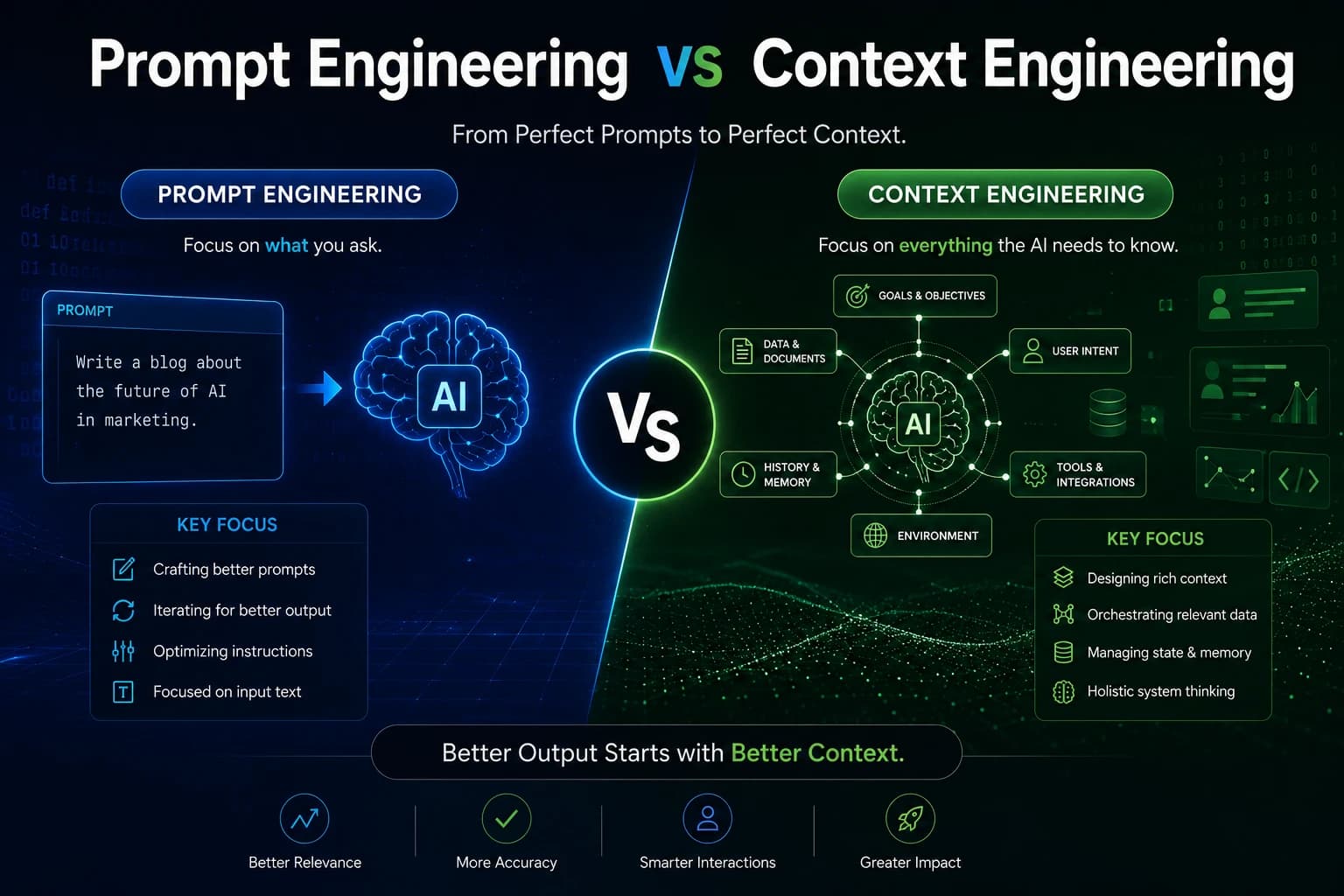
Context engineering and data access must be defined prior to model integration. An agent should never be granted sweeping read permissions to corporate data lakes on the assumption that "more context is always better."
Enterprises should implement a structured Data Classification Model for all agent interactions:
Data Category
Example Datasets
Recommended Agent Access
Public
Public docs, marketing blogs, published help articles
Low-Risk Read — unrestricted within business bounds
Need-to-Know — explicit session approvals and audit trails
Restricted
DB credentials, payment details, PII, PHI, signing keys
Blocked by Default — stripped before prompt injection
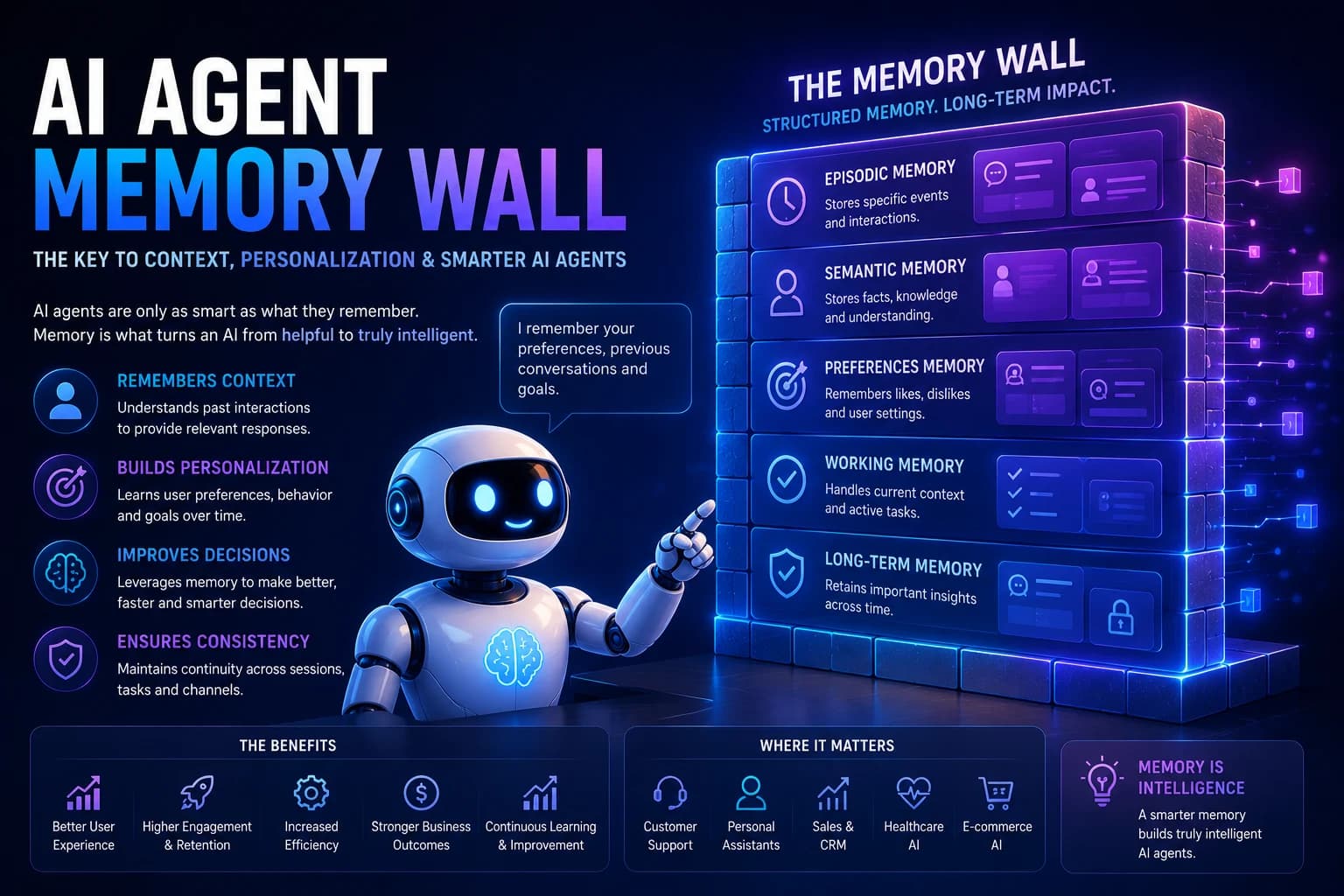
The safest context an agent can process is the context it never receives. Sensitive data must be redacted or tokenized before entering RAG vector stores, agent memory stores, or prompt payloads.
4. AI Agent Security Checklist: Pre-Production Readiness
Before moving an AI agent workflow from staging to production, evaluate your architecture against this five-pillar readiness checklist.
📋 Pillar A — Agent Purpose and Scope
☐ Does the agent have a documented, unambiguous business purpose?
☐ Are permissible tasks and expected outputs strictly enumerated?
☐ Are forbidden tasks explicitly prohibited in system instructions and deterministic code?
☐ Can the agent recognize uncertainty and gracefully route to human operators?
☐ Is an executive or technical owner assigned accountability for agent risk?
☐ Is there a governance cadence to review agent scope when APIs or datasets evolve?
🔐 Pillar B — Identity and Access Control
☐ Does the agent operate under its own dedicated machine or service identity?
☐ Are the requesting user's identity, the agent's identity, and tool credentials segregated?
☐ Are tokens short-lived, regularly rotated, scoped to the minimum resource, and revocable?
☐ Is the agent explicitly barred from using production administrative or root credentials?
☐ Are dev, sandbox, staging, and production environments isolated with distinct credentials?
☐ Is step-up authentication or multi-factor approval enforced for sensitive actions?
☐ Is there an automated kill switch to revoke credentials and disable the agent instantly?
🔧 Pillar C — Tool and API Controls
☐ Does an active inventory exist for every tool, webhook, API, and MCP connector?
☐ Does each tool have an assigned engineering and business owner?
☐ Are tools allowlisted explicitly rather than discovered and invoked dynamically?
☐ Are all tool arguments validated against strict JSON schemas before execution?
☐ Are destructive actions (DELETE, UPDATE, DROP) blocked or gated behind human authorization?
☐ Are arbitrary shell invocations, raw SQL strings, and unrestricted web browsing prevented?
☐ Are strict rate limits, spending quotas, retry caps, and loop-depth bounds enforced?
✅ Pillar D — Human Approval Boundaries
☐ Is human approval mandatory for customer-facing communications?
☐ Are public content releases and marketing publications gated by human sign-off?
☐ Do production database modifications or schema alterations require authorization?
☐ Are role modifications, permission escalations, or user provisioning human-reviewed?
☐ Do financial transactions, contract adjustments, or refund issuances require explicit approval?
☐ Are approval requests bound to specific, time-limited parameters rather than open-ended passes?
🛡️ Pillar E — Prompt Injection Defences
☐ Are system instructions structurally segregated from untrusted external data payloads?
☐ Are retrieved documents, email bodies, and web responses treated as untrusted context?
☐ Is tool execution restricted after consuming unverified external text?
☐ Are dynamic tool definitions compiled safely without raw text evaluation?
☐ Are models tested against adversarial jailbreaks and indirect prompt injection before release?
☐ Is deterministic validation enforced alongside prompt instructions as the primary defense?
The Model Context Protocol (MCP) standardizes how AI applications connect with enterprise data repositories and operational tools. While this interoperability accelerates development, it introduces attack vectors that must be actively managed.
A remote MCP server can read datasets, generate records, alter files, or execute actions on behalf of the user. MCP servers and connectors must be treated as critical enterprise integrations — not dev utilities.
⚠️ Industry Precaution: Remote Connectors & MCP Risks
Anthropic's custom connector security guidance emphasizes that connecting AI agents to remote endpoints requires verifying server operators, inspecting OAuth permissions, and thoroughly inspecting tool behavior and invocation prompts.
The OWASP MCP Top 10 Vulnerabilities
The OWASP MCP Top 10 outlines the most critical vulnerabilities in Model Context Protocol implementations:
#
Vulnerability
Description
1
Token Mismanagement
Hardcoded API keys, unrotated bearer tokens, and static secrets in connector files.
Automated Memory Scanning: Regularly scan memory databases for leaked credentials using automated pattern detection.
7. Monitoring and Observability
You cannot protect what you cannot observe. Production AI agents require real-time observability covering both operational metrics and behavioral anomalies.
Essential Logging Signals
For every agent interaction, your telemetry layer should record:
Signal
What to Log
Request Metadata
Unique User Request ID, Session ID, and Timestamp
Agent Identity
Machine principal or service account initiating the action
Tool Details
Specific tool invoked, destination endpoint, and permission scope used
Payload Hashes
Input parameters and response schemas (with sensitive values redacted)
Approval Evidence
Approval status, approver identity, and validation timestamp
Model Signatures
Provider, model checkpoint, and system prompt version
Performance Telemetry
Prompt token count, completion tokens, latency, and estimated compute cost
Automated Anomaly Alerts
Configure SIEM and monitoring systems to alert on:
Attempts to invoke unregistered or new tools
Requests seeking elevated permission scopes
Network requests targeting unapproved domains or IP addresses
Repeated action failures indicative of automated brute-forcing
Abnormal surges in token usage, cost, or execution latency
Bulk record export, deletion, or role change attempts
Behavioral drift following model or system prompt updates
8. Test the Agent Like an Attacker Would
A smooth demo does not prove security. Before deploying any AI agent into production, red teams and security engineers must subject it to rigorous adversarial evaluation.
Attack Vector
Test Scenario
Risk Level
Direct Injection
Testing override phrases inside user prompts
Critical
Indirect Injection
Embedding hidden instructions in PDFs & tickets
Critical
Data Exfiltration
Coercing the agent to leak secrets via tool calls
Critical
Tool Misuse
Passing malformed payloads to explore edge cases
High
Privilege Bypass
Attempting to execute admin actions as a basic user
Critical
Approval Bypass
Simulating approval tokens or skipping gates
Critical
Memory Leakage
Attempting cross-session prompt extraction
High
Runaway Loops
Triggering circular tool calls to exhaust compute
High
Structured security testing must be conducted prior to initial release and repeated whenever prompts, underlying models, MCP connectors, or operational tools are updated, in accordance with OWASP adversarial validation standards.
9. A Practical Enterprise Security Architecture
A mature, defensible enterprise AI agent enforces a clear separation of concerns across every execution step:
Audit Logging & SIEM — every step logged with full trace ID
Continuous Monitoring — behavioral anomaly detection running in parallel
The AI model assists in understanding user intent and recommending operational actions. However, a deterministic security and policy layer must decide whether that action is permitted.
This distinction is crucial: an AI model should never serve as the sole authority approving its own access to confidential systems, modifying customer records, issuing financial credits, or deploying infrastructure changes.
🚀 Ready to Secure Your AI Agents?
Architect Secure, Production-Grade AI Agents
Intellectual Clouds helps forward-thinking enterprises design and deploy governed, high-impact AI agents. From scoped identity design and MCP connector audits to human-in-the-loop workflows and red-team testing, our architects ensure your agentic initiatives remain secure, compliant, and cost-effective.
AI agent security is the comprehensive set of technical and governance controls used to protect AI systems that can reason, use tools, access enterprise data, and execute autonomous actions. It encompasses machine identity management, least-privilege tool scoping, input/output validation, data minimization, human-in-the-loop approval workflows, end-to-end audit logging, and continuous adversarial testing.
Why should an AI agent have its own identity?
A dedicated machine identity ensures that every action executed by the agent is distinctly attributable in system logs and that its permissions can be restricted without impacting human accounts. Reusing an employee's personal credentials creates immense security risk, bypasses audit separation, and makes it impossible to revoke the agent's access without disrupting human staff.
What is least privilege for AI agents?
Least privilege means an agent receives only the bare minimum tools, read/write permissions, and data visibility required to perform its immediate assigned task. For example, a customer research agent should be restricted to read-only CRM queries and prevented from modifying account ownership, altering billing plans, or accessing sensitive financial records.
Is MCP secure?
The Model Context Protocol (MCP) can be deployed securely, but it introduces distinct operational risks if left unmanaged. Every MCP server, remote connector, tool definition, and data pathway must be rigorously governed with scoped OAuth credentials, schema validation, dependency auditing, network allowlisting, and granular interaction logging.
Can prompt injection be fully solved?
No single security control can completely eliminate the threat of prompt injection. Robust enterprise defenses require defense-in-depth: combining structural input separation, tool allowlisting, strict schema bounds, deterministic authorization gates, sandboxed execution, real-time output sanitization, and automated anomaly detection.
When should human approval be required?
Deterministic human approval should be enforced whenever an action is high-impact, financially significant, externally visible, administrative, or irreversible. Common examples include publishing customer-facing communications, executing monetary refunds, updating production database records, altering access permissions, and applying code modifications.
Author & Trust Notes
Author: Intellectual Clouds Team | Technical Review: AI Security Architect & Governance Lead | Last Updated: October 2026
Asim Ansari is the Founder of Intellectual Clouds and a Certified Salesforce Administrator and Pardot Specialist with 17+ years of experience across Salesforce CRM, AI automation, cloud infrastructure (AWS), and digital transformation. He writes on AI agents, Salesforce delivery, Answer Engine Optimisation (AEO), and AI-accelerated business operations.