HomeBlogThe Agentic Web: Why Retailers, Banks, and Travel Sites Restrict AI Agents
AI Agents
The Agentic Web: Why Retailers, Banks, and Travel Sites Restrict AI Agents
Asim Ansari
October 31, 2026
28 min read
Why are retailers, banks, and travel sites restricting AI agents? Explore security, consent, identity, APIs, and what businesses should build next.
Quick Answer
Why are websites blocking AI agents? Retailers, financial institutions, and travel platforms restrict independent AI agents because agents do not merely read pages - they execute actions inside authenticated sessions that impact payments, personal data, inventory, and legal compliance. Sites cannot reliably verify who the agent represents, whether the user consented to the exact transaction, or who holds financial liability when autonomous operations fail. The sustainable solution is not pretending an agent is a human browser, but providing cryptographically verified agent identities, scoped delegated authorization, and structured, policy-governed APIs.
The internet is crossing a monumental architectural threshold: the shift from the Informational Web to the Agentic Web.
For nearly three decades, web infrastructure, bot protection, and digital commerce models were designed around a single fundamental assumption: a human being sits in front of a glass screen, clicks links, evaluates prices, reads reviews, and manually enters credentials and credit cards.
Today, autonomous AI agents - powered by reasoning models, computer-use capabilities, and protocols like Model Context Protocol (MCP) - are stepping into that loop. Instead of just answering questions, agents can compare flight cancellation terms across airlines, assemble carts, manage bank accounts, book hotels, and execute multi-step checkouts on a person's behalf.
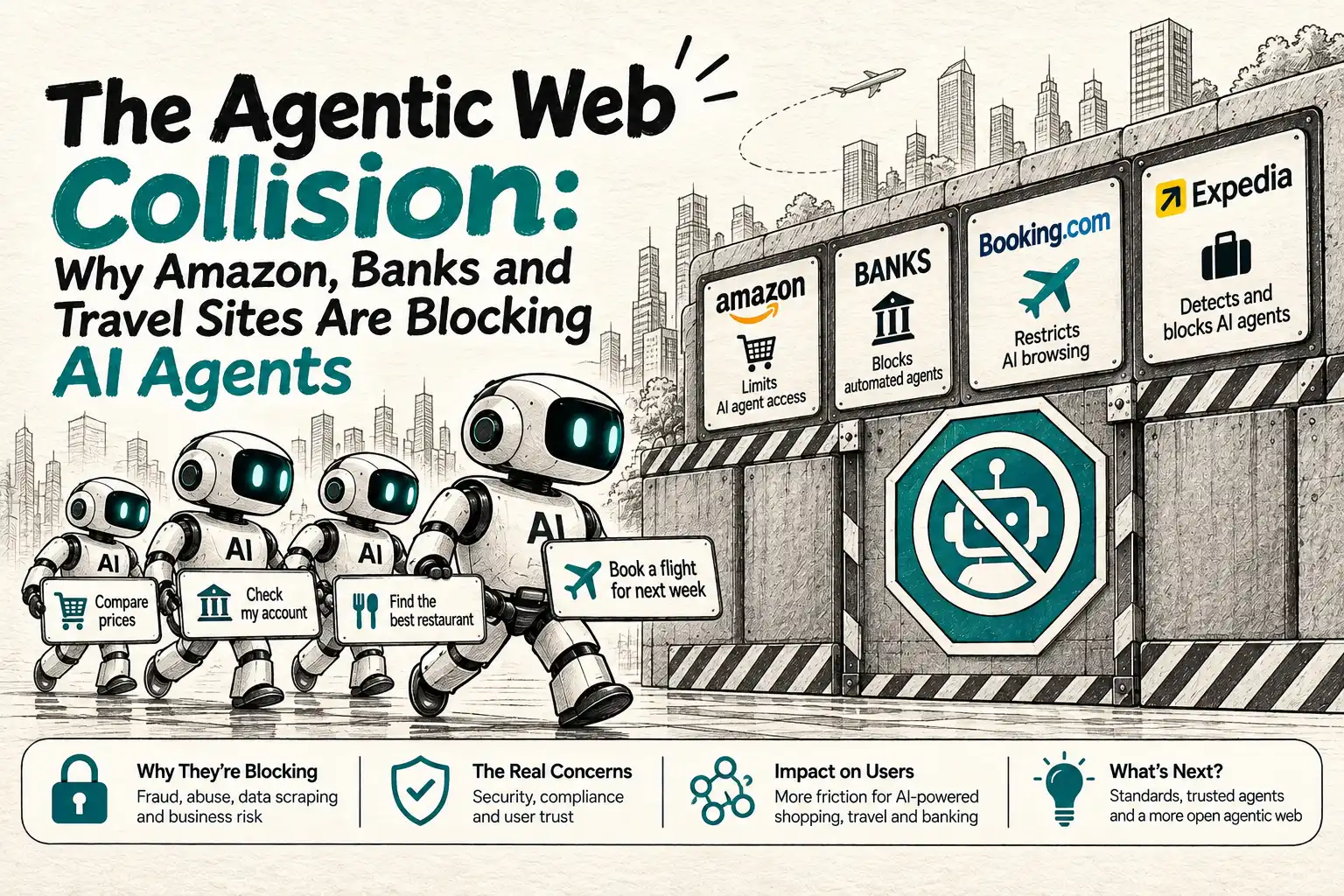
Yet as this capability expands, an equally aggressive counter-reaction has unfolded. Major enterprise platforms, global airlines, e-commerce giants, and retail banks are aggressively erecting bot challenges, blocking autonomous headless browsers, and terminating unapproved automated sessions.
Recent enterprise cybersecurity telemetry and digital commerce disclosures reveal that major platforms - including Amazon, global commercial banks, and international travel operators - are systematically challenging unauthorized, headless AI agents.
However, this is not a universal declaration of war against artificial intelligence. For instance, Amazon has officially codified an Amazon Agent Policy and strict Agent Policy Requirements that obligate agents to declare their identity and comply with security rules.
To build reliable products in this new era, technical founders, product teams, and enterprise architects must understand why websites block AI agents, how the incentives of users and services collide, and how to build verifiable, agent-ready architectures.
What is the Agentic Web?
The agentic web is an emerging computing paradigm where autonomous AI software agents interpret a user's natural language goal and autonomously interact with web applications, databases, and APIs to complete end-to-end multi-step tasks.
Unlike traditional web search that indexes pages or chatbots that generate conversational answers, an agentic system executes consequential actions.
The Web Evolution: From Browsing to Autonomous Agency
1. Web 1.0 & 2.0
Human reads HTML, navigates blue links, and manually completes transactions.
➔
⬇
2. Conversational AI
LLMs answer questions, synthesize knowledge, and suggest options (Zero-Click Answers).
➔
⬇
3. The Agentic Web
Agents parse state, hold delegated credentials, invoke APIs, and transact autonomously.
In this paradigm, a user no longer types:
"Find cheap hotels in Chicago with free cancellation and a gym."
Instead, they issue a directive:
"Find the best 4-star hotel in downtown Chicago under $250/night with refundable booking for next Tuesday, lock in the reservation using my corporate card, and forward the itinerary to my calendar."
Carrying out that single directive requires:
Navigating complex search and filter interfaces.
Handling real-time dynamic pricing and inventory queries.
Authenticating into a customer loyalty account.
Passing sensitive payment details.
Binding legal responsibility for cancellation and non-refundable terms.
The moment an AI system transitions from finding information to altering financial and personal state, web security requirements change dramatically.
Why Do Websites Block or Limit AI Agents?
Websites rarely block AI agents out of simple spite or anti-innovation sentiment. Instead, website operators, security engineers, and fraud teams are responding to grave structural risks.
When an unauthenticated or rogue AI agent hits an enterprise web application, the site cannot distinguish between an authorized personal assistant and a sophisticated credential-stuffing bot, a malicious scraper, or an inventory hoarder.
Core Concern
Why the Website Restricts Agents
Safer Architectural Response
Account & Payment Security
Agents often run inside logged-in sessions or handle plaintext user credentials, creating severe session-hijacking and exfiltration risks.
Implement delegated, scoped OAuth 2.0 authorization tokens rather than sharing passwords.
Unclear Identity & Provenance
The server cannot verify whether traffic originates from a human, a vetted agent, or an adversarial scraping network.
Enforce machine-verifiable agent identity headers and public key infrastructure (PKI) signatures.
User Consent & Financial Liability
If an LLM hallucinates an order, books non-refundable tickets, or mistypes an address, who covers chargebacks and disputes?
Require cryptographic confirmation bound to the exact transaction amount, recipient, and parameters.
Abuse & Service Availability
High-concurrency LLM web agents overwhelm server infrastructure, distort pricing models, and trigger inventory locks.
Provide documented machine APIs with rate limits, tiering, and dedicated computational quotas.
Business Model & Disintermediation
Aggregator agents strip away vendor branding, sponsored listings, upsells, and direct customer relationships.
Financial services, health records, and travel bookings carry strict statutory audit requirements (PCI-DSS, GDPR, PSD2/3).
Enforce deterministic security guardrails outside of probabilistic model prompts.
To safeguard services against uncontrolled automation, infrastructure providers such as Cloudflare offer native configuration controls to block AI scrapers and agent traffic, as detailed in Cloudflare's AI bot documentation. Similarly, Amazon enforces strict identification guidelines in its Amazon Agent Policy requirements.
Why Banks Are Especially Cautious
Online banking and fintech represent the highest-friction sector for the agentic web.
When a consumer entrusts an experimental AI agent with banking credentials or asks an agent to monitor and move funds, the fundamental security perimeter of modern financial systems breaks down.
The Banking Credential Problem
If an AI agent collects a customer's online banking username, password, or SMS OTP to bypass anti-bot defenses, the financial institution has no mathematical or legal mechanism to distinguish legitimate account holder activity from unauthorized account takeover (ATO), session replay malware, or rogue automated scripts.
In Canada, for example, major commercial institutions have publicly warned that using third-party AI assistants to interact with accounts can violate bank terms of service and void statutory fraud protections, as covered in a Global News report on Canadian banks and AI agents.
The banking sector cannot afford the stochastic unpredictability of Large Language Models. Hallucinations in a chatbot lead to awkward customer service; hallucinations in an agentic banking workflow can trigger unauthorized wire transfers, incorrect overdraft executions, or unintended tax liability.
Separation of Proposal from Execution: The language model must only propose a financial action (e.g., "Prepare $500 transfer to Utility Account #8812"). It must never hold the cryptographic authority to execute that transfer unilaterally.
Deterministic Out-of-Band Human Approval: Financial actions must require step-up authentication (e.g., biometric passkey or push notification) on an isolated device.
Open Banking & Delegated APIs: Rather than scraping online portals with browser automation tools like Playwright or Puppeteer, agents must authenticate through regulated Open Banking APIs (like FDX in North America or Open Banking PSD2 in the UK and EU) with granular, revocable read/write scopes.
Why Travel Booking Fails Even When Search Works
A common paradox on the agentic web occurs in travel and hospitality. An autonomous AI agent might successfully browse Google Flights or Kayak, extract flight options, compare hotel ratings, and summarize itineraries - yet completely collapse the moment it attempts to finalize the booking.
Why does discovery succeed while execution fails?
Discovery Phase (Search)
Status: Success (Allowed)
✓
Public Catalog Scrape: Public schedules, routes, and baseline prices are readily accessible without an authenticated user account.
✓
Read-Only Operations: Querying flight numbers and hotel amenities does not reserve resources or trigger financial risk.
✓
CDN Cache Friendly: Search queries are served directly from cached edge endpoints without stressing core reservation databases.
Booking Phase (Execution)
Status: Hard Failure (Blocked)
✕
Bot Challenges & CAPTCHAs: Checkout endpoints detect headless browsers and terminate the transaction immediately.
✕
Inventory Lock Timeouts: Real-time seat hold locks (10-15 min) expire before the agent resolves user confirmation loops.
The friction points in autonomous travel booking stem from three distinct realities:
1. Dynamic Pricing & Inventory Locking
When a human selects a seat on an airline, the reservation system holds that seat for 10 to 15 minutes. If thousands of concurrent AI agents begin creating synthetic carts to compare real-time prices for prospective travelers, they lock up high-value airline inventory, distorting revenue management algorithms and causing false "Sold Out" warnings for human buyers.
2. Multi-Tier Partner Booking Channels
Most travel providers maintain distinct systems: consumer-facing web frontends (optimized for advertising, seat selection, and ancillary sales like car rentals) and Global Distribution Systems (GDS like Amadeus, Sabre, and Travelport) accessible strictly to accredited travel agents via contractual APIs. When an AI agent scrapes consumer frontends, it bypasses the commercial and legal terms of accredited distribution.
3. Protocol-Based Partnerships Are Emerging
Travel platforms recognize that agentic booking is inevitable, but they require governed protocols. For example, travel tech giant eDreams ODIGEO and Visa announced dedicated AI agent protocols to enable secure, tokenized agentic commerce in travel.
The industry is rapidly dividing: unsupported, brittle browser automation is being blocked, while standardized, protocol-driven agent access is being welcomed.
The Real Collision: User Convenience vs. Service Control
At its core, the tension defining the agentic web is an economic and governance struggle between the user's desire for zero-friction automation and the digital platform's imperative for operational control.
What the User Wants
Eliminate repetitive form filling and checkout clicks.
One unified assistant that works seamlessly across all websites.
Instant price optimization and automatic discount discovery.
Zero platform lock-in or captive advertising funnels.
What the Platform Needs
Attribution and retention of direct customer relationships.
Protection against distributed denial-of-service and scrapers.
Explicit contractual liability for disputed transactions.
Monetization through upsells, sponsorships, and brand experiences.
This standoff cannot be resolved by building smarter CAPTCHA bypassers or training computer-use models to act more human. Doing so merely fuels an escalating, expensive cyber arms race.
Instead, the ecosystem requires explicit architectural contracts between users, agents, and web platforms.
Browser Automation vs. Approved Integrations
How should software teams bridge the gap between AI agents and modern web services?
The table below breaks down the four predominant integration paradigms currently competing across the agentic web.
Approach
How It Works
Key Strengths
Critical Limitations
Browser Automation (Computer-Use / Headless)
Agent clicks buttons, parses DOM trees, and interacts with visual UI elements using headless Chrome.
Works universally without requiring backend modifications from the target website.
Extremely fragile when DOM changes; vulnerable to bot mitigation; impossible to audit or scope securely.
Public or Partner REST/GraphQL APIs
Agent communicates directly with documented JSON endpoints under rate-limited API keys.
High performance, structured error codes, deterministic data formats, and auditable metrics.
Requires the platform provider to design, document, and maintain public interfaces.
Delegated Authorization (OAuth 2.0 / MCP Tokens)
User grants the agent fine-grained permissions (e.g., cart:write, order:read) without exposing passwords.
Enforces least privilege; access tokens can be scoped, time-bound, or instantly revoked.
Demands standardized authorization specifications across diverse SaaS and e-commerce platforms.
Human-Approved Handoff (Agentic Concierge)
Agent executes research, compiles options, and generates a pre-filled checkout link for the user to confirm.
Eliminates unauthorized liability; zero chargeback risk for platforms; satisfies legal consent.
Introduces a human confirmation step, preventing 100% end-to-end autonomous background checkout.
For mission-critical enterprise systems, combining Scoped Delegated APIs with Human-Approved Handoffs offers the most resilient, legally defensible architecture available today.
8 Things Businesses Should Do Now
Whether you operate an e-commerce platform, a financial service, or a high-growth SaaS startup, you cannot ignore the agentic web. Follow this 8-step roadmap to establish an agent-ready, secure digital architecture:
1. Classify Agent Capabilities into Clear Security Tiers
Do not treat all automated traffic identically. Separate public catalog retrieval from account management and irreversible financial actions. Browsing products or documentation requires minimal friction, while updating shipping addresses or placing an order must enforce strict identity checks.
2. Mandate Agent Identity Instead of Borrowed Credentials
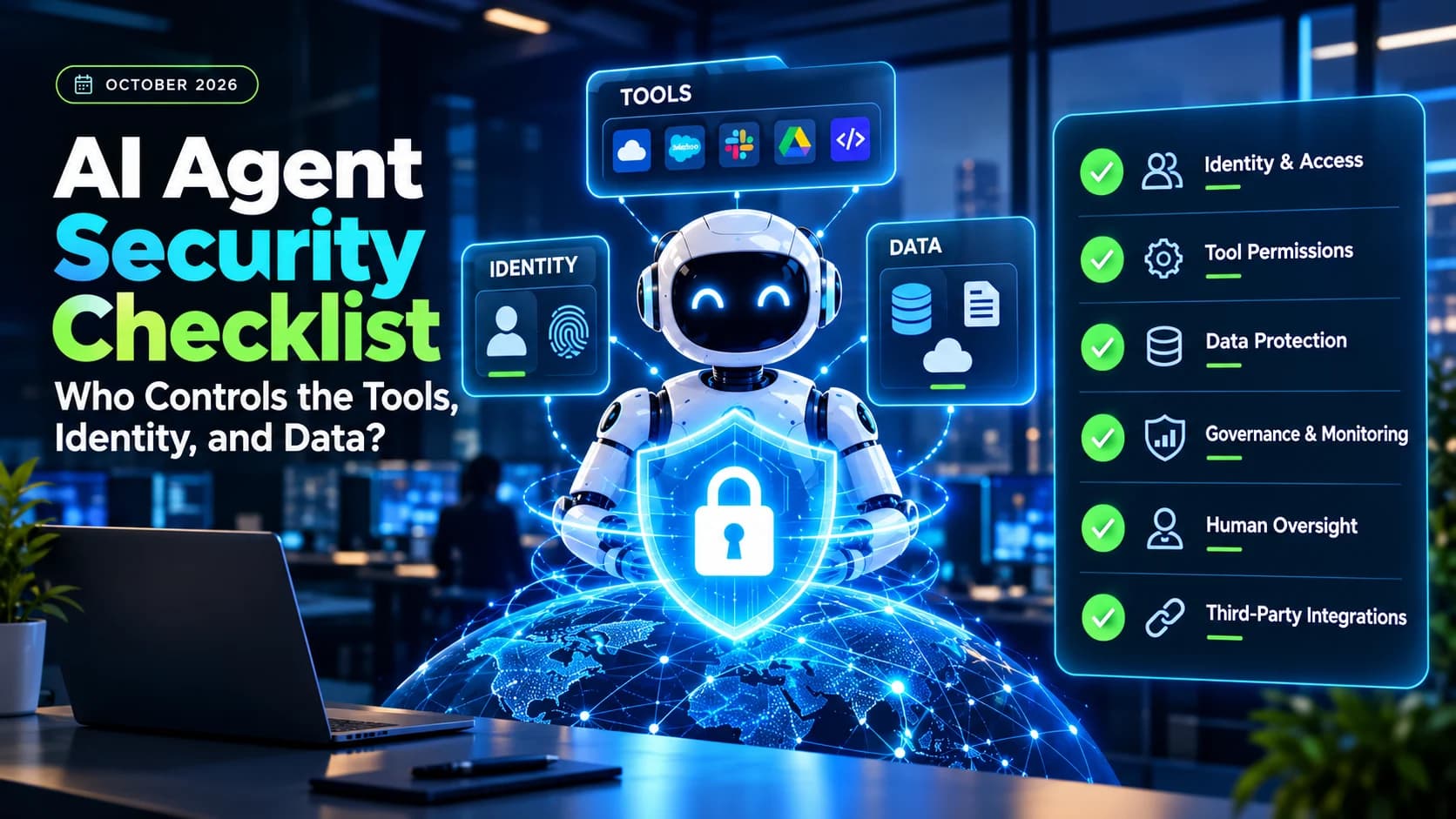
Never permit AI services to store raw user passwords or replicate human browser cookies. Require agents to pass verifiable identity headers (including developer identity, application ID, and user delegation certificates). For an in-depth implementation guide, review our AI Agent Security Checklist.
3. Enforce Deterministic Authorization Outside the Model
Large Language Models are probabilistic reasoning engines, not security gatekeepers. Never rely on system prompts like "Do not transfer more than $100" to enforce business logic. All security rules, transaction limits, and parameter validations must execute in deterministic code before the database writes.
4. Implement Principles of Least Privilege & Least Agency
Restrict agent tool access to the exact scope necessary for the immediate task. If an agent only needs to read order statuses, it should not have write permissions to customer records. Apply tight token expiration windows and strict API rate limits.
5. Require Explicit Confirmation for Consequential Operations
Before executing irreversible actions (such as purchasing non-refundable tickets, transferring funds, or deleting accounts), present the user with a concise summary stating the exact merchant, line items, final price, and cancellation policies. Bind authorization strictly to that payload.
6. Maintain Immutable, Comprehensive Audit Trails
Log every agent interaction, including the delegated user ID, agent ID, tool invocations, parameters, policy evaluation decisions, and transaction outcomes. Ensure audit logs redact Personally Identifiable Information (PII) while preserving data for dispute resolution.
7. Publish a Transparent Machine Access Policy
Publish clear guidelines (such as robots.txt, llms.txt, and developer terms) indicating how automated systems are permitted to index or interact with your service. For optimization strategies, see our guide on how to format content for AI crawlers.
8. Stress-Test Failure Modes and Adversarial Inputs
Rigorously test how your application handles stale pricing data, partial network drops, bot challenges, and prompt injection attacks. Follow technical guidelines from OWASP DevSecOps guidance for AI Agent and MCP Security.
Building Agent-Ready Systems or Securing AI Workflows?
From headless e-commerce integrations and Model Context Protocol (MCP) gateways to enterprise Salesforce AI security, Intellectual Clouds engineers resilient, production-grade AI platforms.
What Users Should Do Before Connecting an AI Agent
For end-users and enterprise operators connecting AI assistants to personal or corporate accounts, adopting defensive security habits is essential:
Never share master account credentials: Avoid pasting passwords, recovery codes, or two-factor authentication (2FA) SMS codes into an AI prompt or browser automation extension.
Inspect requested scopes: Verify whether the agent requests read-only visibility or full write and transaction authority. Revoke permissions immediately once tasks are finished.
Enforce human approval gates: Ensure that any action involving financial transfers, bookings, or data deletion requires your explicit manual verification on a trusted device.
Monitor account audit feeds: Regularly review official transaction histories on your primary banking, travel, and shopping portals to verify agent activity.
What This Means for E-Commerce and Digital Product Teams
For digital product leaders, the rise of the agentic web is an architectural opportunity rather than just a cybersecurity threat.
Retailers that rely purely on anti-bot cloaking risk turning away genuine purchasing demand as consumer behavior evolves toward AI-assisted shopping. The winning organizations will treat autonomous agents as a new, high-value distribution channel.
The Phased Agent Rollout Strategy
Phase 1
Catalog Exposure
Provide clean JSON endpoints and structured schema for public search.
Phase 2
Authenticated Read
Enable scoped token access to read order statuses and shipping data.
Phase 3
Cart Preparation
Allow agents to assemble carts, apply promos, and fetch accurate totals.
Phase 4
Verified Checkout
Support tokenized protocols like ACP for seamless purchases.
For companies deploying on enterprise stacks like Salesforce Commerce Cloud or Shopify Plus, combining composable APIs with custom AI agents ensures your catalog remains discoverable by answer engines while keeping core transactional databases fully protected.
Where the Agentic Web Is Heading
The next phase of the web will not be characterized by autonomous agents hacking through obfuscated HTML or spoofing human mouse movements.
Instead, the web will bifurcate into two synchronized layers:
The Human Web: Rich, engaging visual layouts designed for human eyes, brand experiences, storytelling, and emotional engagement.
The Machine Web: Fast, secure, typed interfaces where authenticated AI agents interact with structured endpoints, cryptographically sign their requests, and conduct commerce on behalf of humans.
Websites will always maintain bot mitigation systems. But the critical question facing modern enterprises is no longer: "How do we block all bots?"
The real question is: "How can our platform reliably distinguish authorized, accountable AI agents from malicious automation - and give them safe, auditable pathways to do business with us?"
Frequently Asked Questions
1. Why are websites blocking AI agents?
Websites block or restrict AI agents because they cannot verify the agent's identity, confirm valid user authorization, or prevent scrapers, inventory hoarding, and financial fraud. Consequential actions like booking flights or transferring money introduce immense legal and chargeback liabilities if an automated system hallucinates or fails.
2. Are all AI agents blocked on Amazon?
No. Amazon enforces an official Agent Policy requiring automated systems and agents to explicitly declare their identity and comply with security rules. Unauthorized bots that scrape listings, hoard inventory, or mimic human browser sessions without compliance are blocked by anti-bot defenses.
3. Why are banks so strict about AI agent access?
Financial services face stringent regulatory requirements (including PCI-DSS, KYC, and AML laws). If a consumer gives an AI agent login credentials, the bank cannot differentiate legitimate customer instructions from malware, session theft, or automated fraud. Banks require regulated Open Banking APIs and biometric human verification for fund transfers.
4. Is an API safer than browser automation for AI agents?
Yes. Approved APIs provide structured data contracts, deterministic rate limits, scoped OAuth 2.0 permissions, and immutable audit logs. In contrast, browser automation using headless browsers is fragile, easily breaks during UI updates, and poses severe credential exfiltration risks.
5. What is delegated authorization for AI agents?
Delegated authorization allows a user to grant an AI assistant specific, limited permissions (e.g., "prepare cart" or "check order status") without sharing their username or password. The access token is time-restricted, cryptographically signed, and can be revoked at any time.
6. How can businesses prepare for agentic commerce?
Businesses can expose clean, headless REST/GraphQL endpoints, implement standards like the Agentic Commerce Protocol (ACP), structure product data using JSON-LD schema, and enforce external deterministic approval gates for high-impact transactions.
Asim Ansari is the Founder of Intellectual Clouds and a Certified Salesforce Administrator and Pardot Specialist with 17+ years of experience across Salesforce CRM, AI automation, cloud infrastructure (AWS), and digital transformation. He writes on AI agents, Salesforce delivery, Answer Engine Optimisation (AEO), and AI-accelerated business operations.