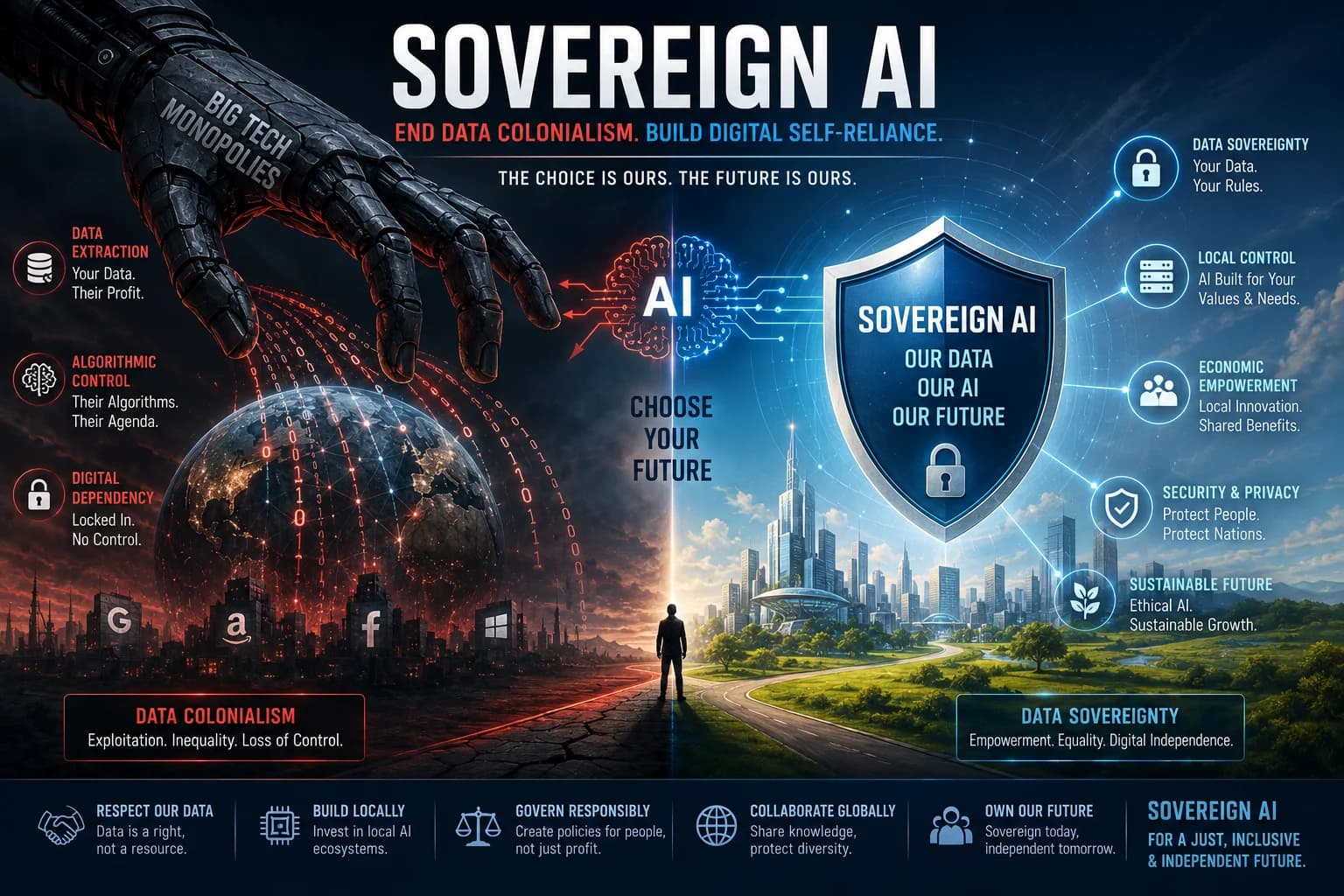
Direct Answer: Sovereign AI refers to a nation's ability to develop, deploy, and govern artificial intelligence using its own infrastructure, data, workforce, and business networks. It marks a shift away from data colonialism, as countries build domestic AI factories, national datasets, and sovereign LLMs to protect sensitive data, cultural identity, and economic independence.
By Asim Ansari, Intellectual Clouds | Last Updated: June 19, 2026
Sovereign AI is becoming one of the most important technology trends of 2026. In simple terms, countries no longer want to only consume AI built elsewhere. They want to own the systems, datasets, compute, and rules that shape their digital future.
This shift is not just about technology. It is about national security, language, economic power, data protection, and cultural identity. As AI becomes embedded in government services, healthcare, education, defense, finance, and enterprise workflows, nations are realizing that dependency on foreign AI platforms can create strategic risk.
The old model was simple: local users produced data, foreign platforms processed it, and countries bought back intelligence through cloud subscriptions. The new model is different. Nations are building AI factories, national datasets, domestic LLMs, and sovereign cloud environments so that critical intelligence can be trained, hosted, and governed closer to home.
What is sovereign AI?
Sovereign AI is the capability of a country or region to build and operate AI systems under its own legal, cultural, economic, and security priorities. It includes local compute infrastructure, local or controlled datasets, domestic AI talent, model governance, cloud jurisdiction, cybersecurity, and the ability to deploy AI without depending entirely on external providers.
NVIDIA defines sovereign AI around a nation's ability to produce AI using its own infrastructure, data, workforce, and business networks. That definition matters because AI is no longer only a software product. It is becoming infrastructure.
Why sovereign AI is becoming a national priority
Countries are investing in sovereign AI because general-purpose AI models increasingly influence how citizens access information, how businesses automate work, and how governments deliver services. When the underlying models, training data, cloud systems, and policy controls sit outside national jurisdiction, countries face four major risks.
First, sensitive data may leave the country or be processed under foreign legal systems. This is a concern for government records, healthcare data, defense systems, identity platforms, and regulated industries.
Second, global models may not understand local languages, dialects, laws, customs, or social context well enough. A model trained mostly on English-language internet data can miss nuance in Urdu, Arabic, Hindi, Swahili, Bahasa, Turkish, or other regional languages.
Third, countries can become economically dependent on imported AI platforms. If the most valuable layer of the digital economy is controlled elsewhere, local startups and enterprises may have less control over cost, access, and product direction.
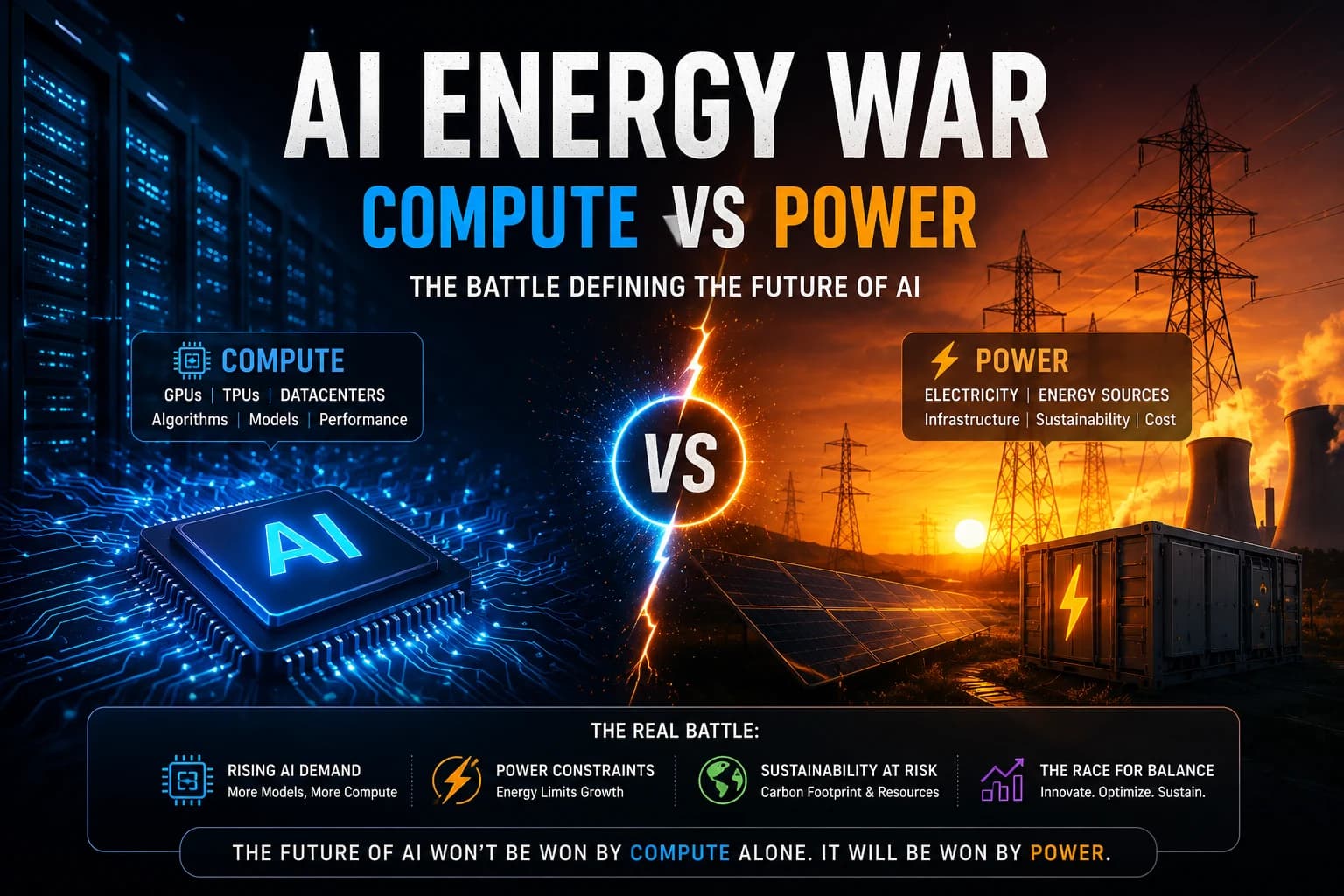
Fourth, infrastructure itself is now strategic. AI workloads depend on chips, data centers, energy, optical networks, cooling systems, and skilled operators. Sovereignty is no longer only about data ownership. It is also about whether a nation can reliably run AI at scale.
From data colonialism to AI sovereignty
Data colonialism describes a power imbalance where local data, behavior, language, and cultural knowledge are extracted from people and markets, then converted into commercial intelligence by outside platforms. In the AI era, this concern has become sharper because data is not just stored or analyzed. It becomes part of model behavior.
For the Global South and smaller technology economies, the fear is not only privacy loss. The larger concern is value extraction. A country may generate valuable language data, medical data, educational data, customer data, and public-sector data, while the economic benefits of the resulting AI systems accrue somewhere else.
Sovereign AI is a response to that imbalance. It does not mean every country must isolate itself from global technology. It means countries want more control over the layers that matter most: data, compute, model access, governance, procurement, cybersecurity, and talent development.
The rise of AI factories
AI factories are next-generation data centers designed to produce intelligence. Instead of only hosting websites and databases, they run large-scale training, fine-tuning, inference, retrieval systems, AI agents, and enterprise automation workloads.
Europe is already organizing around this model. The EuroHPC Joint Undertaking says the European Union has established 19 AI Factories and 13 AI Factory Antennas to support SMEs, startups, industry, and scientific users with computing resources and support services.
This matters because access to compute is now a competitive advantage. If local startups cannot access affordable GPUs, secure inference, or scalable model hosting, they will struggle to compete with companies in markets where AI infrastructure is subsidized, coordinated, or easier to access.
Domestic LLMs and language sovereignty
Domestic LLMs are language models trained, adapted, or governed for local needs. Their purpose is not only to compete with global frontier models. In many cases, domestic LLMs are built to handle local language, speech, law, public services, education, and business workflows.
India is a useful example. Reporting around the IndiaAI Mission shows growing support for domestic foundation models and compute access. In June 2026, Economic Times reported that IndiaAI Mission-supported startups had created 20 foundational AI models, with five released.
The key lesson is clear: countries with large multilingual populations need AI systems that understand local speech, code-mixing, cultural references, legal context, and public-sector workflows. A generic global model can be useful, but it may not be enough for national-scale adoption.
Sovereign AI does not mean isolation
One mistake is to treat sovereign AI as digital isolation. In practice, most countries will use a hybrid model. They will still partner with global chipmakers, cloud providers, open-source communities, research labs, and enterprise software vendors. The difference is that they will demand stronger local control.
A realistic sovereign AI strategy may include:
- Local or jurisdiction-controlled cloud infrastructure.
- Access to domestic or allied compute capacity.
- National datasets with privacy and security controls.
- Domestic model development and fine-tuning.
- Open-source model adoption where appropriate.
- AI governance aligned with local law.
- Procurement rules for regulated industries.
- Talent programs to reduce brain drain.
- Enterprise-grade cybersecurity and auditability.
- Public-private partnerships for AI infrastructure.
This is why sovereign AI is best understood as a continuum. A nation may not control every chip, model, dataset, and application. But it can reduce dependency in critical layers.
What sovereign AI means for enterprises
Sovereign AI is not only a government issue. Enterprises are facing the same questions at a smaller scale. Banks, hospitals, manufacturers, law firms, logistics companies, and public-sector contractors need to know where their data goes, which models process it, how outputs are audited, and whether AI workflows comply with local rules.
For businesses, sovereign AI usually means:
- keeping sensitive data inside approved cloud regions or private infrastructure;
- using retrieval-augmented generation instead of exposing private data to public models;
- choosing models based on compliance, cost, latency, and accuracy;
- building audit trails for AI-assisted decisions;
- training AI agents on approved internal knowledge;
- preventing vendor lock-in by keeping model and workflow layers portable.
This is where AI infrastructure strategy becomes practical. The goal is not to build a national supercomputer. The goal is to design AI systems that are secure, controllable, compliant, and useful.
The strategic pillars of a sovereign AI nation
1. Compute capacity
Compute is the foundation of AI sovereignty. Countries need access to GPUs, AI accelerators, storage, networking, energy, and data center operations. Without compute, local models and AI startups remain dependent on external platforms.
The UK AI Opportunities Action Plan recommended expanding the AI Research Resource by at least 20x by 2030 and using sovereign compute for national priorities. It also proposed AI Growth Zones to accelerate data center buildout.
2. National and sector-specific datasets
AI quality depends on data quality. Governments and enterprises need curated datasets for language, law, education, healthcare, agriculture, finance, logistics, and public services. These datasets must be governed carefully because they often include sensitive or high-value information.
3. Local language and cultural alignment
Language is strategic infrastructure. Countries that want inclusive AI adoption need models that understand local languages, dialects, mixed-language conversations, and cultural context. This is especially important in countries where official, business, and household languages differ.
4. AI governance and auditability
Sovereign AI requires more than local hosting. It needs policies for model evaluation, data protection, bias testing, procurement, incident response, human oversight, and accountability. Without governance, local AI can still create local harm.
5. Talent and ecosystem development
The strongest AI ecosystems combine researchers, engineers, founders, cloud operators, cybersecurity experts, policymakers, and domain specialists. Sovereign AI is not only built in data centers. It is built through universities, startups, public-sector labs, and enterprise adoption.
Risks and limitations
Sovereign AI is important, but it is not easy. Building domestic AI capability is expensive and operationally difficult. Countries must manage high infrastructure costs, energy demand, water usage, chip supply constraints, cybersecurity threats, talent shortages, and the risk of duplicating global models without creating real local advantage.
There is also a dependency paradox. Some sovereign AI projects still rely heavily on foreign chips, cloud software, model architectures, and consulting expertise. That does not make them useless, but it means sovereignty should be measured honestly.
The question is not, "Do we control everything?" The better question is, "Which AI layers must we control to protect national interests, regulated data, local innovation, and public trust?"
How Intellectual Clouds helps organizations prepare for sovereign AI
At Intellectual Clouds, we help organizations design AI systems that are secure, scalable, and aligned with modern data sovereignty requirements. Our work includes private AI workflows, cloud integrations, AI agents, retrieval systems, automation architecture, and AI-friendly SEO strategies that make technical expertise visible to both search engines and AI answer systems.
If your organization is exploring local-first AI, private cloud AI, enterprise AI agents, or secure model integration, our team can help you build a practical roadmap.
Talk to our AI Integration Architects: Contact Us
The bottom line
Sovereign AI is not a passing buzzword. It is a response to a real shift in power. As AI becomes part of national infrastructure, countries and enterprises will want more control over data, compute, models, governance, and talent.
The nations that lead the next decade will not only be the ones that use the best AI. They will be the ones that understand which parts of AI must be owned, governed, localized, and trusted.
Frequently Asked Questions
1. What is sovereign AI?
Sovereign AI is the ability of a country or organization to develop, deploy, and govern AI systems using infrastructure, data, talent, and policies that align with its own legal, cultural, security, and economic priorities.
2. Why is sovereign AI important in 2026?
Sovereign AI is important because AI is becoming critical infrastructure. Governments and enterprises need control over sensitive data, local language support, model governance, cybersecurity, and access to compute for strategic workloads.
3. What is data colonialism in AI?
Data colonialism in AI refers to a power imbalance where local data and human behavior are extracted from one market or population, converted into AI intelligence elsewhere, and then sold back to the original market without equal control or economic benefit.
4. Are domestic LLMs better than global AI models?
Domestic LLMs are not always more powerful than global models, but they can be better for local language, cultural context, regulatory needs, public-sector workflows, and sensitive use cases where data control matters.
5. Does sovereign AI mean countries should stop using global AI providers?
No. Most sovereign AI strategies will remain hybrid. Countries and enterprises can use global providers while keeping critical data, governance, model routing, and infrastructure decisions under stronger local or organizational control.
6. How can enterprises adopt sovereign AI principles?
Enterprises can adopt sovereign AI principles by using approved cloud regions, private or hybrid AI architecture, retrieval-augmented generation, audit logs, model governance, secure AI agents, and clear policies for sensitive data.