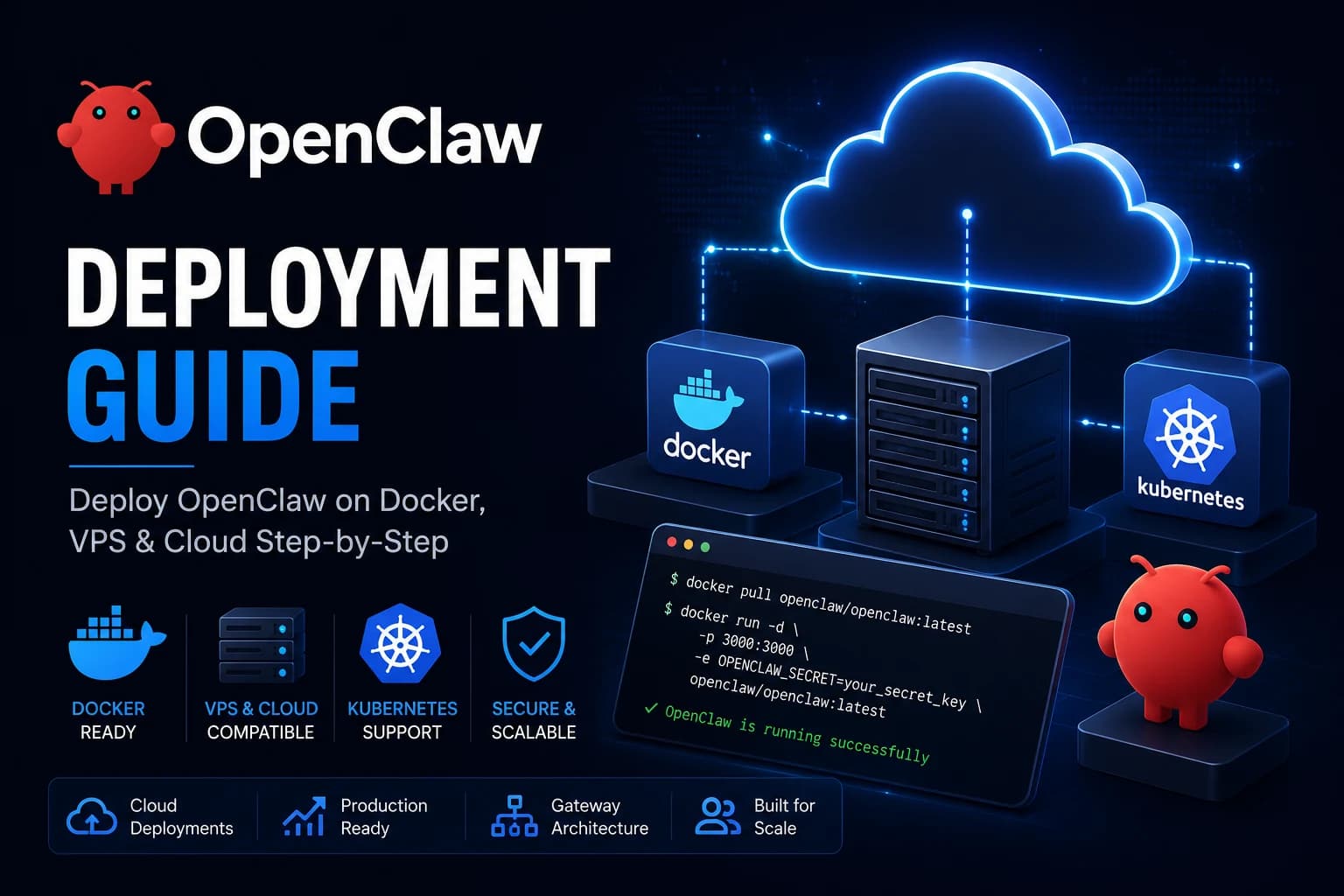
Complete Guide to OpenClaw Deployment: Enterprise-Grade AI Infrastructure Setup
OpenClaw is an enterprise AI infrastructure platform. It helps organizations deploy, manage, and scale AI environments with reliability and security. This guide covers every step of the process — from initial setup to production hardening. Whether you are starting fresh or scaling an existing deployment, follow along for clear, actionable steps.
Why OpenClaw Matters for Enterprise AI
AI teams need infrastructure that scales without breaking. OpenClaw solves this problem. It brings AI agents, workflows, and infrastructure together in one dashboard. You get full visibility and control. This guide shows you exactly how to use OpenClaw to build a production-ready AI environment.
Prerequisites: What You Need Before Starting
Before beginning your OpenClaw deployment, ensure you have these requirements in place:
- Administrator access to your infrastructure and cloud environment
- Valid API credentials for OpenClaw platform authentication
- Network connectivity configured with appropriate firewall rules
- Minimum 4GB RAM for initial deployment (8GB+ recommended for production)
- Stable internet connection for configuration and monitoring
- Basic understanding of cloud infrastructure concepts
Missing any of these? Our team can help you prepare your environment. Contact us for a pre-deployment consultation.
Step 1: Pre-Deployment Environment Validation
The foundation of a successful OpenClaw deployment is proper environment preparation.
System Requirements Validation
Start by validating your infrastructure meets OpenClaw requirements:
- Check CPU and memory - Run system diagnostics to confirm specifications
- Verify network connectivity - Test bandwidth and latency to cloud endpoints
- Confirm storage capacity - Ensure adequate space for AI models and data
- Validate security certificates - Check SSL/TLS certificates are current
- Review access controls - Ensure proper IAM roles and permissions are configured
Installation of Dependencies
OpenClaw requires several core dependencies:
- Docker and container runtime (v20.10+)
- Kubernetes cluster (v1.24+) for orchestration
- Python 3.9+ for AI agent scripting
- Node.js 16+ for dashboard access
- PostgreSQL 12+ for data persistence
Step 2: Core Infrastructure Configuration
With your environment validated, configure your OpenClaw infrastructure foundation.
Server Nodes and Resource Allocation
Plan your infrastructure based on your AI workload:
- Master nodes - 3 minimum for high availability (3 x 4GB RAM minimum)
- Worker nodes - Start with 2-3, scale based on AI agent demands
- Storage nodes - Allocate based on model sizes and data requirements
- Memory allocation - Reserve 2GB per AI agent for optimal performance
Network Topology and Security Setup
Proper networking is critical for production deployments:
- Configure load balancing - Distribute traffic across nodes
- Set up VPC networking - Isolate your OpenClaw infrastructure
- Implement firewall rules - Restrict access to authorized users only
- Enable encryption in transit - Use TLS 1.3 for all connections
- Configure DNS and service discovery - Enable seamless node communication
Storage and Backup Strategy
Protect your AI infrastructure with proper storage planning:
- Primary storage - Fast, redundant SSD storage for active workloads
- Backup storage - Separate backup repository for disaster recovery
- Versioning - Enable version control for infrastructure changes
- Replication - 3x data replication across availability zones
Now deploy and configure the OpenClaw platform itself.
Deploy OpenClaw using these steps:
- Download the latest OpenClaw release from the official repository
- Extract and verify the installation package integrity
- Run the deployment script with your infrastructure configuration
- Wait for all services to initialize (typically 5-10 minutes)
- Verify the dashboard is accessible at your configured endpoint
Authentication and Access Control
Secure your OpenClaw instance immediately after deployment:
- Create admin user - Set strong password (16+ characters)
- Configure OAuth2 - Enable single sign-on (SSO) for your organization
- Set up RBAC - Define roles for developers, operators, and admins
- Enable audit logging - Track all platform access and changes
- Configure API tokens - Generate secure tokens for programmatic access
Step 4: AI Agent Deployment and Configuration
With infrastructure ready, deploy your first AI agents.
Define Agent Specifications
Before deployment, clearly define your agent requirements:
- Agent purpose - What problems will this agent solve?
- Model selection - Choose appropriate AI models (GPT-4, Claude, custom models)
- Resource requirements - CPU, memory, and inference time expectations
- Scaling policies - How should agents scale under load?
- Performance targets - Define SLAs for response time and accuracy
Set up intelligent workflows that automate business processes:
- Map workflow steps - Define sequential or parallel steps
- Set up data pipelines - Configure input/output data flows
- Add error handling - Define fallback behaviors and retry logic
- Implement logging - Enable detailed logs for debugging and monitoring
- Test workflows - Run end-to-end tests before production deployment
Set Up Monitoring and Auto-Scaling
Monitor agent performance and scale automatically:
- Agent health checks - Monitor uptime and performance metrics
- Resource utilization - Track CPU, memory, and API call usage
- Auto-scaling rules - Scale agents based on request volume or latency
- Performance alerts - Get notified of degradation or issues
- Cost optimization - Monitor and optimize cloud spending
Step 5: Production Hardening and Optimization
Before going live, harden your deployment for production use.
Security Hardening
Implement comprehensive security measures:
- Network segmentation - Isolate agent networks from administrative networks
- Secrets management - Use HashiCorp Vault for credential management
- Compliance configuration - Enable features for SOC 2, HIPAA, or GDPR compliance
- Regular security scanning - Automate vulnerability scanning
- Access logging - Enable comprehensive audit trails
Optimize your infrastructure for optimal performance:
- Model optimization - Use quantization and pruning for faster inference
- Caching strategy - Implement Redis caching for frequent queries
- Database indexing - Optimize PostgreSQL indexes for common queries
- API rate limiting - Protect against abuse and ensure fair usage
- Load balancing - Distribute traffic evenly across agents
Monitoring and Observability
Set up comprehensive monitoring before production:
- Metrics collection - Configure Prometheus for metrics gathering
- Log aggregation - Use ELK stack for centralized logging
- Distributed tracing - Enable request tracing across services
- Dashboards - Create dashboards for key metrics
- Alerting rules - Define alerts for critical issues
OpenClaw Deployment Best Practices
Follow these proven practices for successful deployments:
- Always test in staging first - Validate all changes in non-production environments
- Implement gradual rollouts - Use canary deployments to minimize risk
- Monitor resource usage continuously - Prevent resource exhaustion before it happens
- Implement comprehensive backup strategies - Test backups regularly, not just creation
- Keep documentation updated - Document all customizations and configurations
- Conduct regular security audits - Schedule monthly security reviews
- Plan for disaster recovery - Have a tested DR plan in place
- Use infrastructure as code - Manage infrastructure through version-controlled code
Common Deployment Challenges and Solutions
Solution: Implement regular model retraining, monitor inference latency, and use distributed caching to reduce database load.
Challenge 2: High Infrastructure Costs
Solution: Right-size your instances, use spot instances for non-critical workloads, and implement request-based auto-scaling.
Challenge 3: Managing Multiple Environment Configurations
Solution: Use infrastructure as code (Terraform, CloudFormation) with separate state files for each environment.
Frequently Asked Questions About OpenClaw Deployment
Q: How long does a typical OpenClaw deployment take?
A: Basic deployments take 5-7 weeks from planning through production launch. Complex deployments with custom integrations may take 8-12 weeks. Intellectual Clouds can accelerate this with our managed deployment services.
Q: What's the minimum infrastructure required for production?
A: Minimum production setup requires 3 master nodes (4GB RAM each), 2-3 worker nodes (8GB RAM), and persistent storage. However, we recommend 3-5 nodes minimum for high availability and failover capability.
Q: Can I migrate from other AI infrastructure platforms to OpenClaw?
A: Yes. OpenClaw supports migration from competing platforms. Our team handles data migration, workflow porting, and validation to ensure zero downtime transitions.
Q: How do I ensure security and compliance with OpenClaw?
A: OpenClaw provides built-in support for SOC 2, HIPAA, and GDPR. Enable audit logging, implement network segmentation, use secrets management, and conduct regular security audits.
Q: What support options are available?
A: We offer 24/7 expert support, managed services, custom development, and training for OpenClaw deployments. Contact our team for your specific needs.
Next Steps: Getting Help With Your OpenClaw Deployment
Deploying OpenClaw requires careful planning and technical expertise. Our team of AI infrastructure experts can help you:
- Plan your infrastructure - Right-size your deployment for your workloads
- Manage the deployment - Handle complex configuration and testing
- Optimize performance - Fine-tune your infrastructure after deployment
- Provide ongoing support - 24/7 monitoring and issue resolution
Ready to deploy OpenClaw? Contact us for a free consultation with our AI infrastructure specialists. We'll assess your needs and create a deployment plan tailored to your organization.
Conclusion
OpenClaw deployment doesn't have to be complex. By following this comprehensive guide, you can confidently deploy enterprise-grade AI infrastructure that scales with your business needs. Remember: proper planning, thorough testing, and continuous monitoring are the keys to a successful deployment.
Start with the prerequisites, move methodically through each step, and don't hesitate to reach out to our expert team if you have questions. Your production-ready AI infrastructure is just around the corner.
About the Author
Intellectual Clouds Team specializes in enterprise AI infrastructure deployment and optimization. With 500+ successful deployments across Fortune 500 companies, we understand the complexities of production AI systems. Our certified architects have deployed OpenClaw in diverse environments—from startups to enterprises—and are here to help you succeed.
Learn More About OpenClaw
Interested in deploying OpenClaw for your organization? Visit our OpenClaw Setup Agency page to learn how our team of experts can help you implement enterprise-grade AI infrastructure. We provide end-to-end deployment, configuration, and ongoing support for production environments.
Next Steps
Ready to get started? Contact our AI infrastructure specialists for a free consultation and personalized deployment plan tailored to your organization's needs.